Free Range vs. Deep Litter Poultry Farming: The Hidden Truth About Choosing the Best System for Your Budget, Space, and Farming Goals
Starting a poultry business today looks very attractive from the outside. You see people posting healthy birds online, displaying crates of eggs, showing off sold-out broilers, and talking about quick profits.
But behind those success stories is one major decision many poultry farmers struggle with, especially when they are just starting out:
Should you use the free-range system or the deep litter system?
This single decision can determine whether your poultry business becomes profitable or frustrating.
Sadly, many intending poultry farmers copy what others are doing without considering their own budget, land size, labour availability, experience level, security situation, or market demand.
Some people jump into free range because they believe it is cheaper. Others rush into deep litter because they think it is more modern and profitable.
But the truth is this:
Both systems have their strengths and weaknesses.
A system that works perfectly for one farmer may fail badly for another farmer living in a different environment or working with different resources.
This article will help you understand:
- The real differences between free range vs. deep litter poultry farming
- The advantages and disadvantages of both systems
- Common mistakes farmers make
- The hidden costs many people ignore
- And the smartest option, depending on your financial strength and farming goals
Let’s break it down simply and practically.
What Is Free Range Poultry Farming?
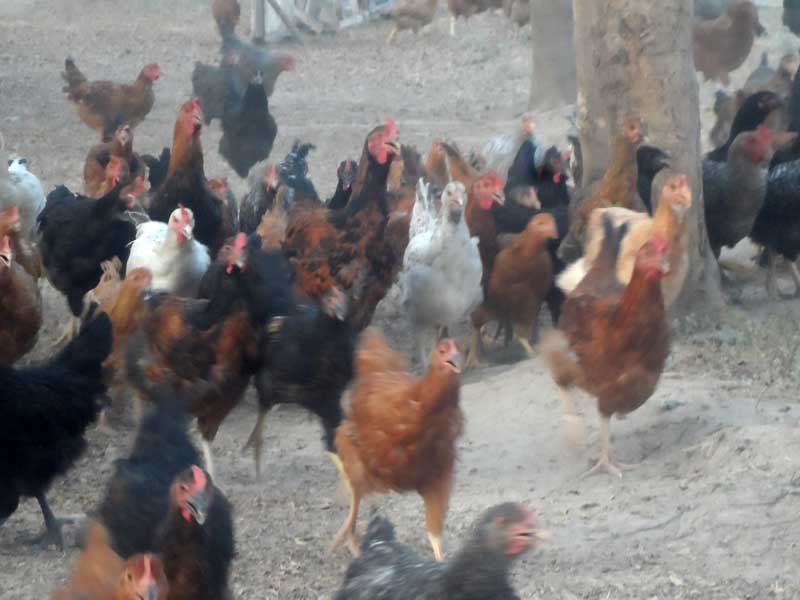
Free-range poultry farming is a system where birds are allowed to move around freely outside for most parts of the day.
The birds search for insects, grasses, seeds, and other natural feed sources while still receiving some supplementary feeding from the farmer.
This system is very common in villages and semi-rural communities.
You often see local chickens roaming compounds freely during the day and returning home in the evening.
Modern free-range farming can also involve fenced outdoor areas to prevent birds from wandering too far, exposing them to predators and theft.
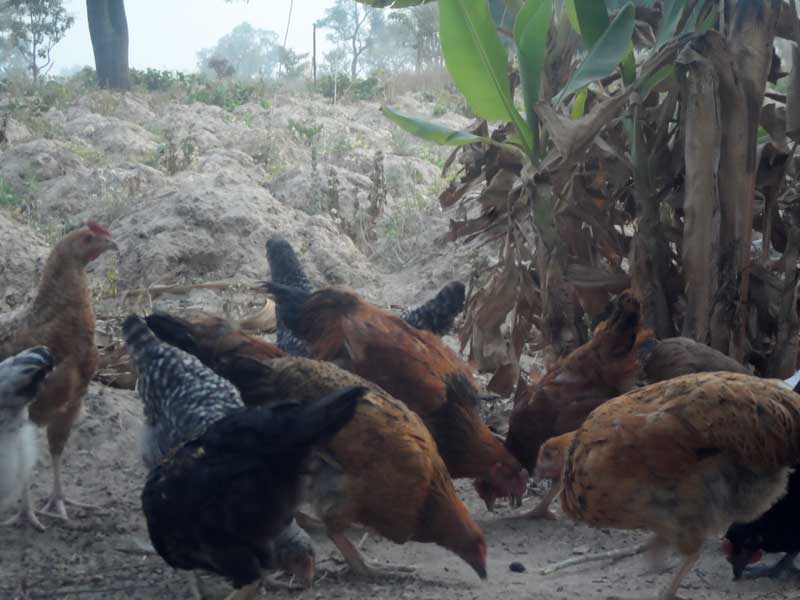
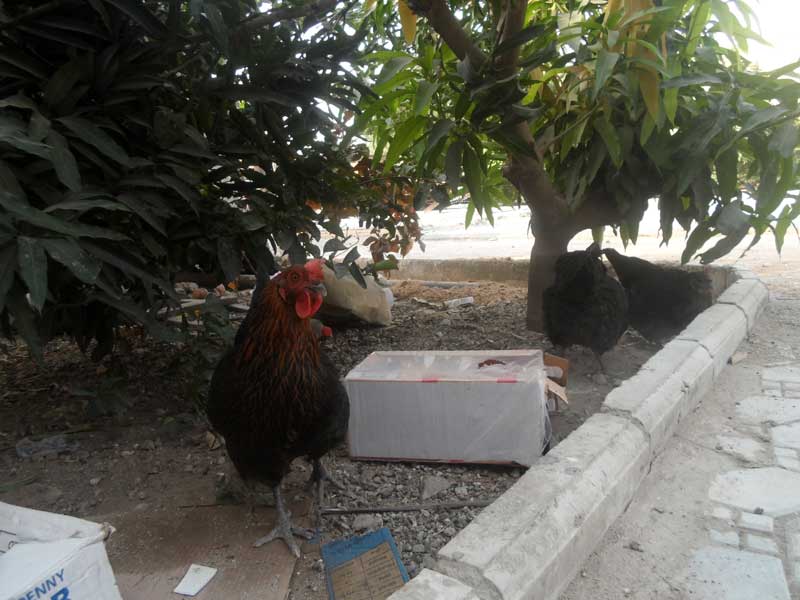
Noilers in a free range sytem of poultry farming
Related article:
7 Reasons Why its Important Farming Your Maize to Feed Your Poultry Birds
13 Important Tips for Good Feed and Water Management in Poultry Farming
Advantages of Free Range Poultry Farming
- Lower Feeding Cost
This is one of the biggest reasons many farmers choose free-range systems.
Because birds search for part of their food naturally, farmers may spend less on commercial feed.
During planting seasons or in areas with abundant vegetation, birds can find worms, insects, grasses, and grains.
For small-scale farmers with limited money, this can reduce feeding costs and pressure.
- Lower housing costs are a very important advantage of free-range chicken farming
Lower housing costs are another good advantage of free range farming, when considering the difference between free range vs deep litter poultry farming
Free-range systems usually require simpler housing structures compared to intensive deep litter systems.
Some farmers use:
- Bamboo structures
- Wooden pens
- Local materials
- Simple shelters
This reduces startup costs.
Related article:
From Backyard Plant to Poultry Medicine: 5 Amazing Benefits of Aloe Vera to Poultry Chickens
5 Shocking Ways Your Poultry Birds Spread Farm-Wrecking Diseases
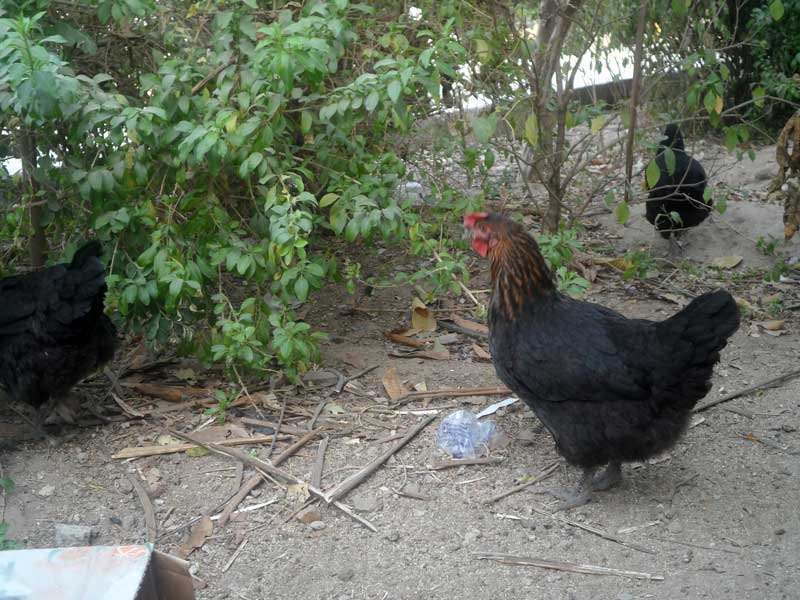
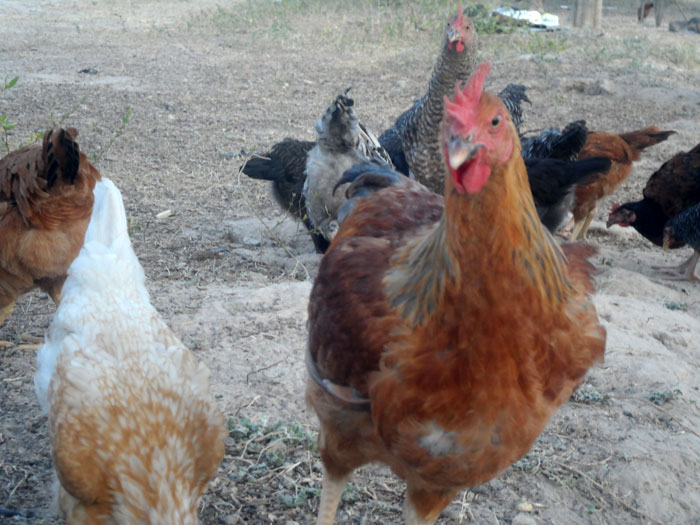
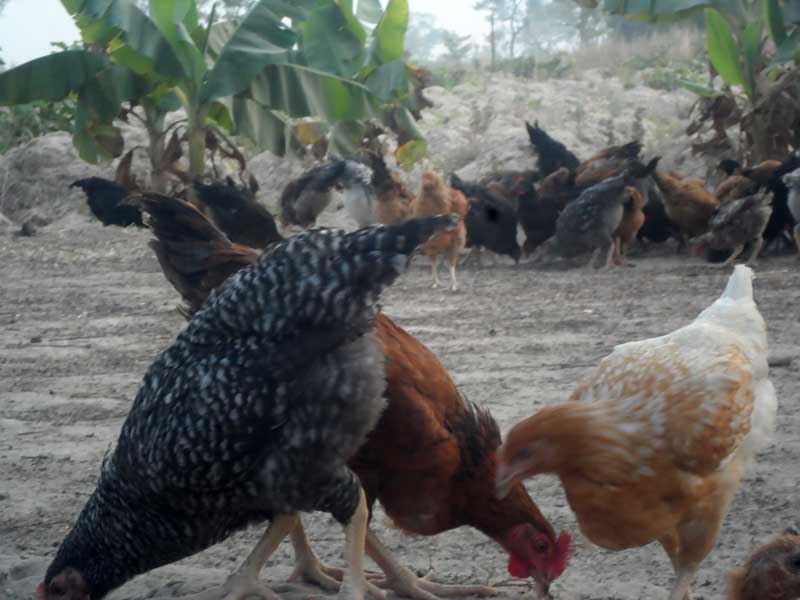
free range poultry farming
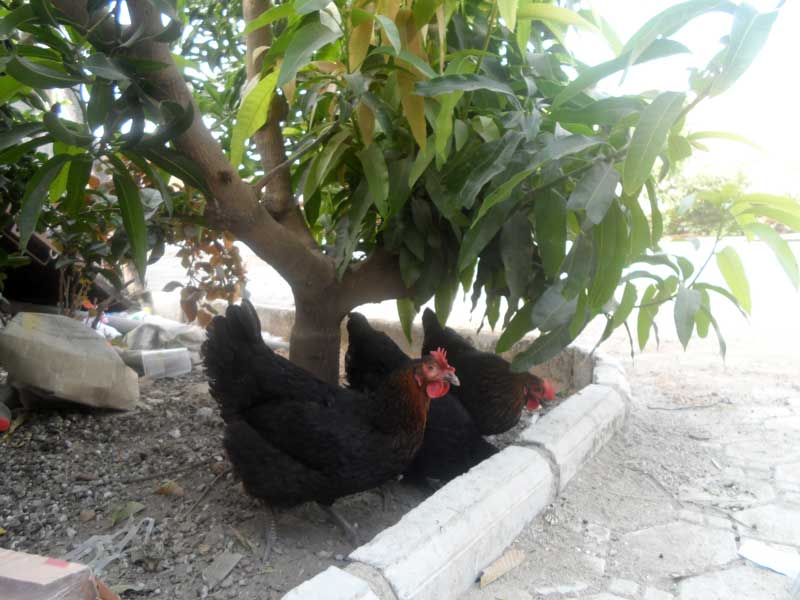
- Better Consumer Preference
Many consumers believe free-range birds taste better and are healthier.
In many African markets, local chickens raised under free-range systems often sell at higher prices than commercial broilers.
Some customers specifically ask for:
- “Organic chicken”
- “Village chicken”
- “Natural chicken”
This creates a special market advantage.
-
One of the major advantages of free-range chicken farming is Reduced Stress in birds. When it comes to the difference between Free Range vs. Deep Litter Poultry Farming
Birds that move freely tend to exercise more and sometimes show less behavioural stress compared to overcrowded birds.
They peck naturally, scratch the ground, and express more natural behaviours.
Disadvantages of Free Range Poultry Farming
Now let’s discuss the hidden realities many people ignore.
-
A major disadvantage in the free range system of poultry farming is Predators and Theft in free range vs deep litter poultry farming
This is a serious problem.
Free-range birds can easily become targets for:
- Hawks
- Snakes
- Dogs
- Wild animals
- Thieves
Many farmers lose birds regularly without realising how costly the losses become over time.
One missing bird daily may not look serious until you calculate the monthly loss.
Related article:
6 Costly Poultry Feeding Mistakes I Made as a Beginner Farmer (And How They Nearly Ruined My Flock)
Commercial Feed vs. Homemade Feed: What I observed as a Small to medium-Scale Poultry Farmer
6 Incredible Benefits of Feeding Garlic, Turmeric, and Moringa to Your Poultry Birds
- Disease Exposure is a serious disadvantage of free-range chicken farming
Another serious disadvantage of free range chicken farming is the fact that birds are often exposed to disease-carrying wild birds, which is a critical factor in Free Range vs. Deep Litter Poultry Farming
Free-range birds come into contact with:
- Wild birds
- Contaminated soil
- Dirty water
- Neighboring poultry
This increases disease risks.
Diseases like:
- Newcastle disease
- Fowl pox
- Coccidiosis
- Worm infestations
Can spread faster when biosecurity is poor.
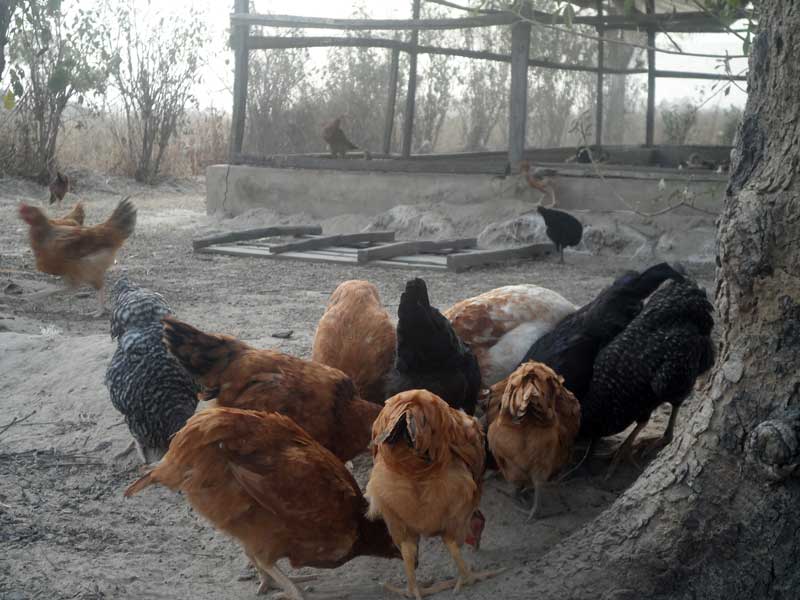
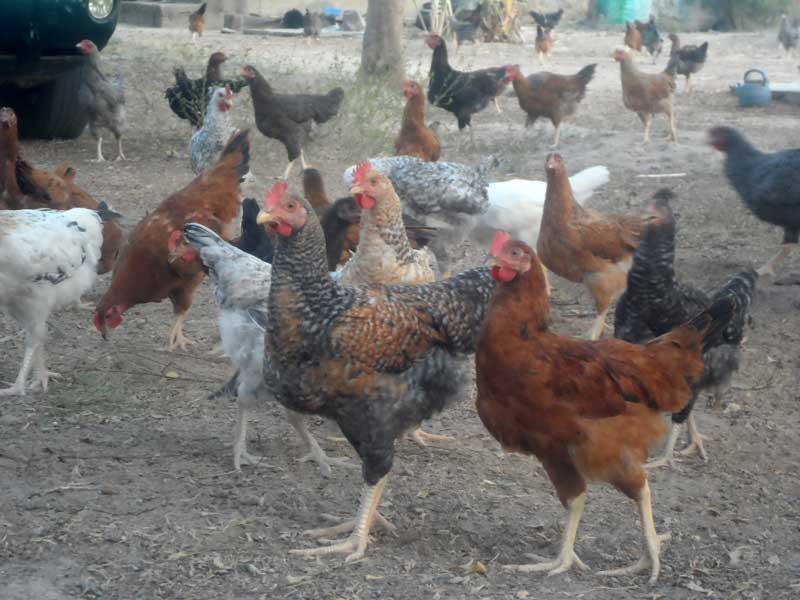
-
Another critical factor in Free Range vs. Deep Litter Poultry Farming is Poor Growth Uniformity, which is attributed to the free range system of poultry farming
In free-range systems, some birds eat better than others.
Aggressive birds may dominate feeding areas while weaker birds struggle.
As a result:
- Birds grow at different rates
- Marketing becomes difficult
- Weight differences become obvious
This affects profitability.
Related article:
7 Best-Known Noiler Secrets That Will Make You a Profitable Poultry Farmer
Feed Is Money: 5 Proven Strategies Successful Poultry Farmers Use to Reduce Feed Waste Every Day
4 Unique Ways You Can Achieve Uniform Body Weight and Growth in Chicken
- Difficult Management
When it comes to free range vs deep litter poultry farming, the difficulty in the management of birds is often linked with free-range poultry farming, which is a serious disadvantage.
Managing hundreds or thousands of birds under free-range systems can become stressful.
It is easier for:
- Birds to lay eggs in hidden places
- Birds are going missing
- Injuries occur unnoticed
- Sick birds to remain untreated
Large-scale management becomes challenging.
What Is Deep Litter Poultry Farming?
Deep litter poultry farming is a system where birds are raised inside a poultry house on floor materials like:
- Wood shavings
- Sawdust
- Rice husk
- Straw
The birds remain indoors while the litter material absorbs moisture and droppings.
This system is widely used for:
- Broilers
- Layers
- Noilers
- Turkeys
Especially in commercial poultry farming.
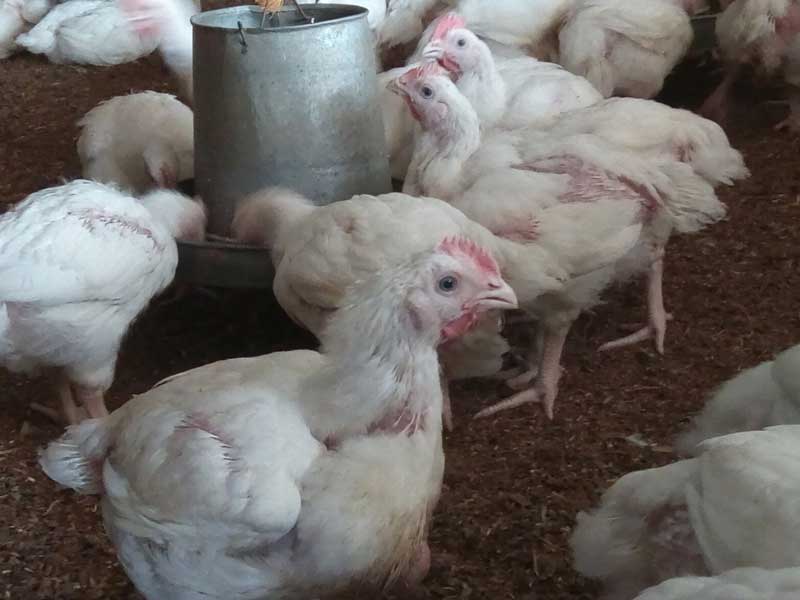
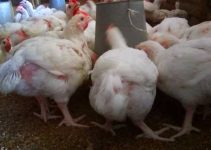
Deep litter system of poultry farming
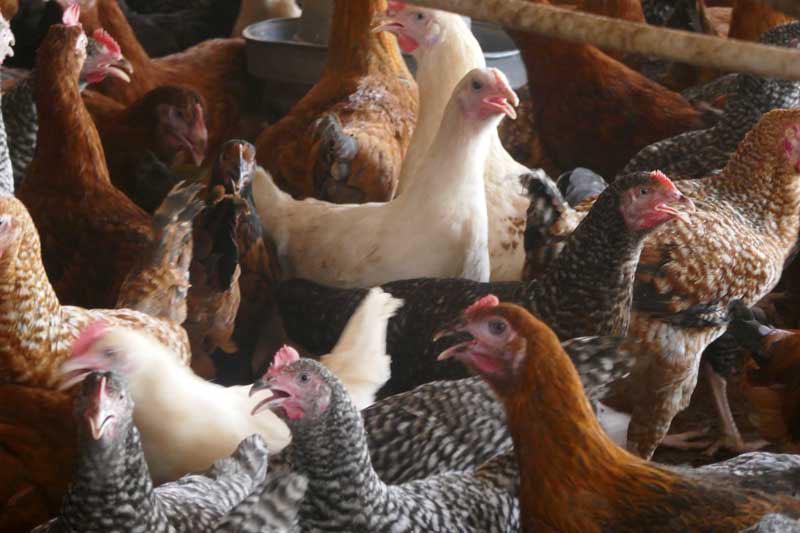
In Free Range vs. Deep Litter Poultry Farming, we are going to explore the Advantages of Deep Litter Poultry Farming
-
In deep litter poultry farming, it is Easier to manage your birds, which makes it a positive factor in free range vs deep litter poultry farming
Deep litter systems allow farmers to monitor birds more effectively.
You can easily:
- Observe sick birds
- Control feeding
- Administer medication
- Monitor water intake
- Vaccinate birds properly
This improves management efficiency.
Related article:
Dust Bath Why Your Chickens Need This All-Important Ritual
How to Effectively Manage Heat stress in Broiler Chicken
- Better Bio-security
Since birds are confined, farmers can better control disease exposure, and disease control is one of the most important factors in poultry farming.
When you talk of the major difference between Free Range vs. Deep Litter Poultry Farming, and making the best choice between the two.
What comes to the minds of most poultry farmers is the best method of disease control after the cost of feed.
Visitors can be restricted.
Footbaths can be used.
Bird contact with wild animals becomes limited.
This helps reduce disease outbreaks.
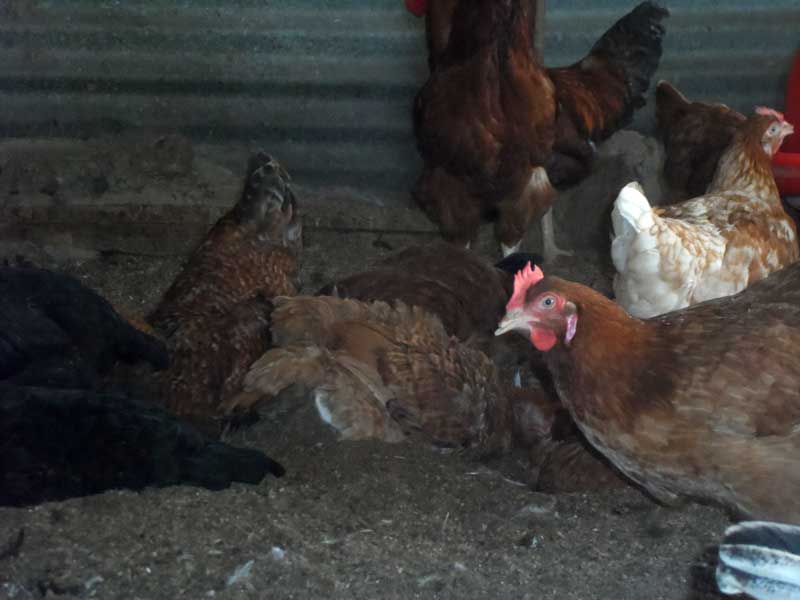
- Faster Growth Rate Due to the intensive method of feeding
Under proper feeding and management, birds in deep litter systems usually grow faster and more uniformly, which is a great boost for deep litter systems in Free Range vs. Deep Litter Poultry Farming preference.
This is especially important for:
- Broiler production
- Commercial meat supply
- Contract farming
Uniform birds attract better buyers.
- When it comes to the advantages of the deep litter system is Better Space Management
Even farmers with limited land can raise a good number of birds using deep litter systems because they are confined in a limited environment.
This is why many urban and semi-urban farmers prefer it when considering the difference in Free Range vs. Deep Litter Poultry Farming.
You don’t necessarily need acres of land to start.
Disadvantages of Deep Litter Poultry Farming
- Higher Feeding Cost, this one bites harder
This is the biggest challenge.
Birds depend almost entirely on the farmer for feed.
And with rising feed prices, this can become financially draining.
Many poultry businesses collapse mainly because of feeding expenses.
Related article:
5 Brutal Reasons Broiler Farmers Struggle to Make Profit (And How you can Fix Them)
Why You Need Vitamin Supplements In Poultry Production
Dehydration in Chickens: How to Avoid This Painful and Costly Mistake
- Heat Stress Problems
In hot weather, poorly ventilated deep litter pens become dangerous, leading to high mortality as a result of heatstroke.
This singular reason makes most poultry farmers prefer free range over deep litter when making their choices in Free Range vs. Deep Litter Poultry Farming
Heat buildup can cause:
- Panting
- Weakness
- Reduced feed intake
- Poor growth
- Sudden mortality
This is a major issue in tropical regions.
Farmers must invest in:
- Proper ventilation
- Adequate spacing
- Cooling strategies
- Clean water supply
- Ammonia Buildup a major cause of poultry diseases
Wet litter produces ammonia gas.
When ammonia levels rise:
- Birds develop respiratory problems
- Eye irritation occurs
- Growth reduces
- Disease susceptibility increases
Poor litter management can destroy flock performance.
- Higher Startup Cost, Especially If You Want To Go Commercial and Automated
Deep litter systems usually require:
- Better housing
- Feeders
- Drinkers
- Litter materials
- Vaccination programs
- Stronger bio-security
This increases initial investment.
So, Which System Is Better between free range vs deep litter poultry farming?
This is where many people get it wrong.
There is no universally “best” system.
The best system depends on:
- Your budget
- Your land size
- Your management skills
- Your market
- Your labour availability
- Your experience level
Let’s simplify it.
Free Range May Be Better If:
- You have a large amount of available land
- You have limited startup capital
- You live in a secure rural area
- You want to raise hardy local breeds
- You target organic or village chicken markets
- Feed cost is your biggest concern
Deep Litter May Be Better If:
- You have limited space
- You want faster production
- You aim for commercial scale
- You can afford quality feed
- You want easier monitoring
- You want better production control
The Hidden Truth Most Farmers Discover Late between Free Range vs. Deep Litter Poultry Farming
Many experienced poultry farmers eventually realise something important:
The smartest approach is often a controlled combination of both systems.
This is where semi-intensive poultry farming comes in.
The Better Alternative: Semi-Intensive Poultry Farming
Semi-intensive systems combine:
- The control of deep litter systems
- The flexibility of free-range systems
Birds stay protected in housing structures but are allowed controlled outdoor access at certain times.
This system can help farmers:
- Reduce feeding costs slightly
- Improve bird welfare
- Reduce stress
- Maintain better disease control
- Improve exercise and natural behaviour
For many small and medium-scale farmers, this balanced approach works very well.
Especially for:
- Noilers
- Dual-purpose chickens
- Indigenous breeds
- Small commercial operations
Related article:
My Rabbits Are Not Producing Again! 5 Hidden Reasons Your Does Refuse to Get Pregnant
Practical Advice for Intending Poultry Farmers
Before choosing any poultry system, ask yourself these questions honestly:
- How Much Money Can I Sustain?
Not just startup capital.
Can you continue feeding birds for months if feed prices increase?
Many farmers start strong but run out of feeding money halfway.
- How Secure Is My Environment?
If theft and predators are common in your area, unrestricted free range may become risky.
- What Type of Birds Am I Raising?
Broilers generally perform better under controlled deep litter systems.
Local chickens and noilers adapt better to semi-intensive or free range systems.
- Who Is My Target Market?
Hotels and restaurants may prefer uniform broilers.
Health-conscious consumers may prefer free-range birds.
Know your buyers before investing heavily.
- Can I Manage Disease Properly?
Poor biosecurity ruins many poultry businesses.
Whether free range or deep litter, vaccination and hygiene remain critical.
Conclusion
Poultry farming is not just about copying trends or following social media hype.
Success comes from choosing a system that matches your:
- Financial capacity
- Available land
- Management ability
- Local market demand
- Long-term farming goals
Free range farming may reduce some costs but increases exposure to predators, theft, and disease.
Deep litter systems improve control and productivity but require stronger financial commitment and management discipline.
For many farmers today, especially small and medium-scale producers, a carefully managed semi-intensive system may provide the best balance between cost, productivity, and bird welfare.
The goal is not to choose the “most popular” system.
The goal is to choose the system you can manage successfully and sustain profitably over time.
Because in poultry farming, consistency and good management will always beat excitement and shortcuts.