
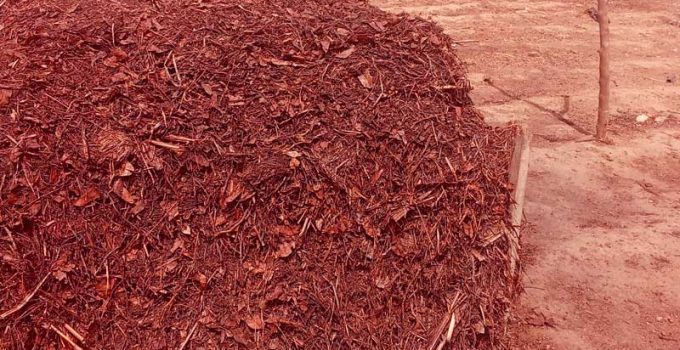
Turn Your Farm Waste into Black Gold: A Step-by-Step Compost Production Guide Every Farmer Can Follow
If you are like most small to medium-scale farmers, you probably spend a good portion of your money every season buying fertiliser. And every time prices rise, your profit margin shrinks.
But here is something many successful farmers have already discovered:
The best fertiliser may already be sitting on your farm as waste without you knowing it.
Crop residues, animal manure, kitchen scraps, weeds, and dry leaves can all be turned into rich organic compost that improves soil fertility, boosts yield, and reduces production cost year after year.
Compost is often called black gold because of its powerful ability to restore soil health and, invariably, increase crop yields and farm profits.
In this practical guide, you’ll learn exactly how to produce quality compost step-by-step using simple tools and materials available on most farms.
What Is Compost And Why Does It Matter To You As A Farmer?
Compost is decomposed organic matter, plant and animal waste broken down by microorganisms into nutrient-rich material that improves soil structure and fertility.
Benefits of compost on your farm
| Benefit | How It Helps You |
| Improves soil fertility | Supplies nutrients slowly and steadily |
| Reduces fertilizer cost | Less dependence on chemical fertilizer |
| Improves soil structure | Better root growth and water retention |
| Increases yield | Healthier crops and stronger growth |
| Reduces waste | Converts farm waste into useful input |
Many farmers who use compost consistently notice better crop performance, even during dry periods, because compost helps the soil retain moisture.
Related article
Enhancing Soil Fertility and Structure with Composted Manure
8 Economic Importance of Compost Manure to Local Farmers
9 Smart Survival Strategies Farmers Are Using to Stay Profitable
Materials You Need for Compost Production
Composting works best when you combine green materials (nitrogen-rich) and brown materials (carbon-rich).
Green materials (nitrogen sources)
- Fresh grass clippings
- Vegetable waste
- Animal manure
- Fresh weeds
- Kitchen scraps
Brown materials (carbon sources)
- Dry leaves
- Straw
- Sawdust (untreated wood)
- Maize stalks
- Rice husks
Other essentials
- Water
- Air (oxygen)
- Microorganisms (naturally present in soil/manure)
Ideal Compost Production Ingredient Balance
In compost production, for compost to decompose properly, you need the right mix.
| Material Type | Proportion |
| Brown (dry materials) | 60% |
| Green (fresh materials) | 40% |
| Moisture | Like a squeezed sponge |
Too much green = bad smell and slow decomposition.
Too much brown = dry pile and slow breakdown.
Balance is the key in compost production.
Related article:
5 Clever Tricks Farmers Use to Outsmart Low Market Prices and Boost Profits
Farming with Little Rain? Discover 5 Proven Ways to Grow Crops in Drought-Prone Areas
Are You Making These Mistakes? 5 Seed Germination Factors You Must Get Right
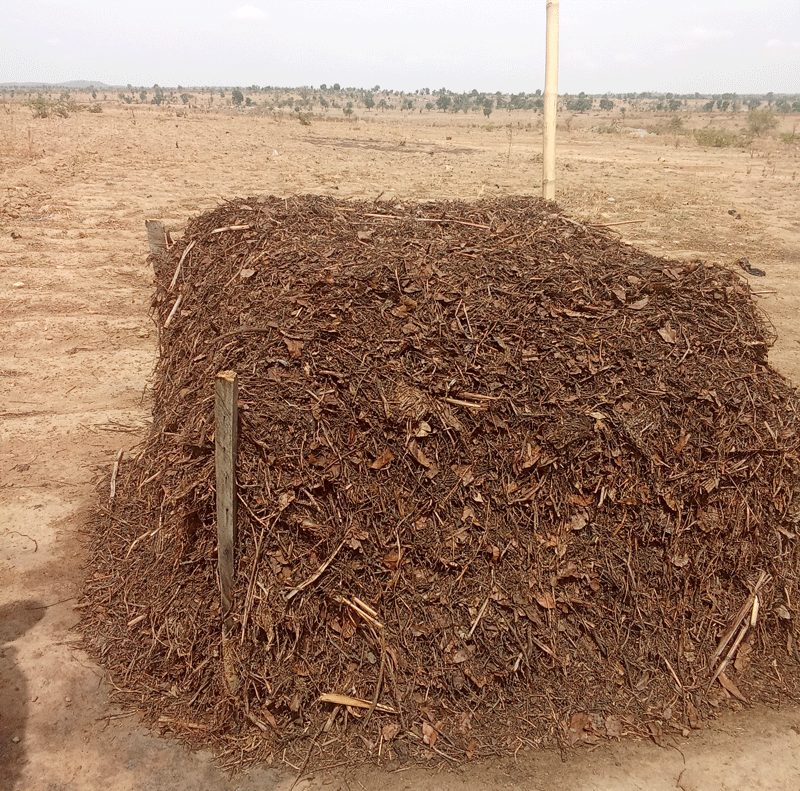
This is a practical site in Nigeria
In A Standard Compost Production Process, Choosing the Right Composting Method Is Critical To Its Success
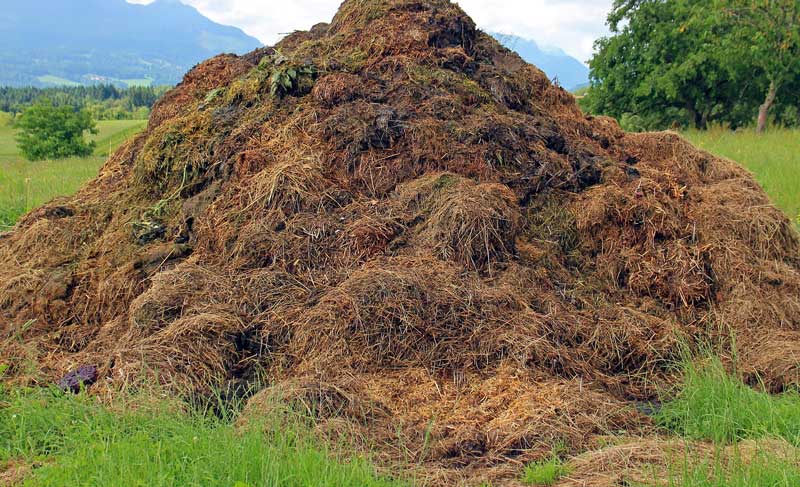
There are several composting methods, but the simplest for small farms is heap or pile composting.
Common composting methods
| Method | Best For |
| Heap/pile | Small to medium farms |
| Pit composting | Dry or windy areas |
| Drum composting | Urban or limited space |
| Windrow composting | Large farms |
In this compost production guide, we focus on heap composting because it is simple, cheap, and effective.
Step-by-Step Compost Production Process
Let’s go through the exact process farmers can follow easily.
STEP 1: Select a Suitable Site
Choose a location that is:
- Shaded, well-drained, close to a water source, very, very, very, important.
- Easy to access
- Avoid waterlogged areas; excess water slows decomposition.
STEP 2: Prepare the Base Layer
Start with coarse dry materials like small sticks or maize stalks.
This allows air to circulate from below.
Compost Pile Structure
—————————
Top: Dry covering material
Green layer (fresh waste)
Brown layer (dry waste)
Green layer
Brown layer
Coarse base (sticks)
Ground surface
Related article:
Stop Wasting Fertiliser! 6 Mistakes That Turn Good Soil Bad
Utilizing Small Space to Make Big Profit, the Hidden Economic Power of Backyard Rabbit Farming
Cashing In With Soybeans Farming, Why You Need To Re-Visit It.
STEP 3: Add Materials in Layers
Alternate green and brown materials.
Example layering pattern:
- Dry leaves
- Animal manure
- Crop residue
- Fresh weeds
- Soil (thin layer)
Repeat layers until the pile reaches about 1–1.5 meters high.
STEP 4: Add Water
Moisten each layer lightly.
Compost should feel like a squeezed sponge, not dripping wet, not dry.
Too much water removes oxygen and causes a bad odour.
STEP 5: Cover the Heap
Cover with:
- Banana leaves
- Old sacks
Covering helps retain heat and moisture.
STEP 6: Turn the Compost Regularly
Turning supplies oxygen and speeds decomposition.
| Compost Age | Turning Frequency |
| First 2 weeks | Every 2–5 days |
| Weeks 3–6 | Once weekly |
| After 6 weeks | Every 2 weeks |
When turning, move outer materials to the centre.
STEP 7: Monitor Temperature
Active compost becomes hot inside; this means decomposition is happening.
Typical temperature stages:
| Stage | Temperature | What Happens |
| Early stage | Warm | Microbes multiply |
| Active stage | Hot | Rapid decomposition |
| Maturity stage | Cooling | Compost stabilizes |
If the pile is not heating:
– Add more green material
– Add water
– Turn pile
Related article:
6 Amazing Facts you should know About Chicken Comb
STEP 8: Wait for Compost to Mature
Compost is ready when:
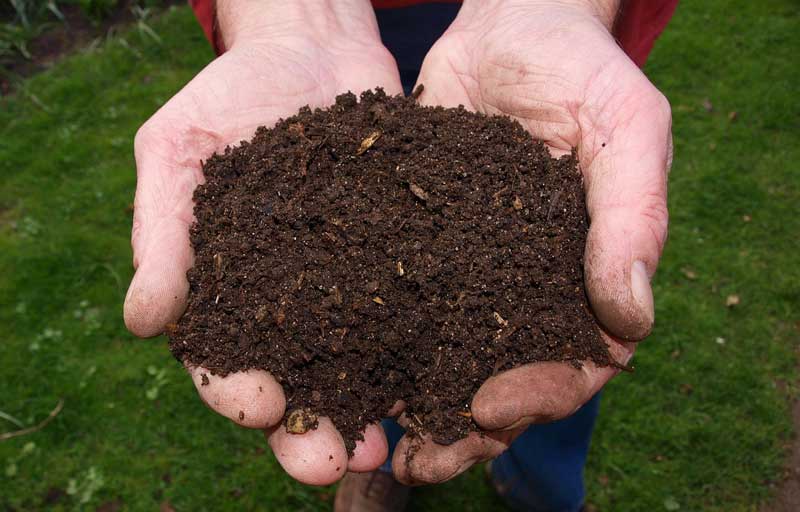
-Dark brown or black
– Earth-like smell
– Cool to touch
– No visible original materials
Time required depends on management.
| Composting Method | Time to Maturity |
| Well-managed heap | 6–8 weeks |
| Poorly managed heap | 3–4 months |
Simple Compost Process Flow Diagram
Farm Waste Collection
↓
Sorting (Green + Brown)
↓
Layering Materials
↓
Moistening with Water
↓
Covering Heap
↓
Turning Regularly
↓
Decomposition
↓
Mature Compost Ready
In Compost Production, There Are Some Common Composting Mistakes Farmers Should Avoid
Many compost piles fail because of simple errors.
| Mistake | Result | Solution |
| Too dry | Slow decomposition | Add water |
| Too wet | Bad smell | Add dry materials |
| No turning | Slow breakdown | Turn regularly |
| Too small pile | No heat | Increase size |
| Poor material mix | Weak compost | Balance green & brown |
How Much Compost Should You Apply?
The application depends on crop type and soil condition.
| Crop Type | Compost Application Rate |
| Vegetables | 2–5 tons per hectare |
| Maize | 1–3 tons per hectare |
| Tree crops | 5–10 kg per plant |
| Nursery beds | Mix with soil 1:1 |
Always mix compost into soil before planting.
Cost Comparison: Chemical Fertiliser vs Compost
Let’s look at a simple yearly comparison.
| Input | Buying Fertilizer | Using Compost |
| Input cost | High | Low |
| Soil health | Declines over time | Improves yearly |
| Yield stability | Variable | More stable |
| Long-term profit | Lower | Higher |
Compost improves soil every season, making farming easier over time.
Extra Tips for Faster Compost Production
Farmers who want faster results can:
-Chop materials into small pieces
-Add animal manure to speed decomposition
-Maintain proper moisture
-Turn frequently
-Keep the pile large enough to retain heat
Small pieces break down faster because microbes have more surface area to work on.
Signs of High-Quality Compost
Good compost should:
-Crumble easily
-Smells like forest soil
-Be free from pests
-Contain no visible fresh waste
If compost smells rotten, it needs more air and dry material.
A practical Real-Life Example from a Small Farm
A vegetable farmer involved in compost production uses poultry manure and crop residue to reduced fertilizer purchase by 60% within one year.
After two seasons:
- Soil retained more moisture
- Vegetable yield increased
- Production cost dropped significantly
Compost not only saved money, but it also improved productivity.
The Long-Term Power of Compost
Compost is not just fertiliser, it is soil medicine.
When used regularly:
- Soil becomes richer each year
- Crops become stronger
- Water use becomes more efficient
- Production cost continues to fall
It is one of the most sustainable investments a farmer can make.
In Summary
Every farm produces waste. Smart farmers turn that waste into profit.
Compost production is simple, low-cost, and highly effective. With the step-by-step method you’ve learned here, you can start producing nutrient-rich organic fertiliser right on your farm.
You do not need expensive equipment.
You do not need special training.
You only need consistency and proper management.
Start small. Build one compost heap. Observe results. Expand gradually.
Before long, you’ll notice healthier soil, better yields, and lower production costs. season after season.
That is why farmers everywhere call compost…
“Black gold”.


