Why Some Broiler Farmers Make Millions While Others Lose Money: The Hidden Secrets of Broiler Farming Profitability
Broiler farming looks simple from the outside.
Buy day-old chicks, feed them for several weeks, give them water and medication, then sell the mature birds.
But anyone who has actually operated a broiler farm knows that making money from broilers is not that simple.
Two farmers can buy chicks from the same hatchery, use similar feed, keep their birds for the same number of weeks and sell in the same market, yet one farmer makes a healthy profit while the other struggles to recover his investment.
Why?
The answer is broiler farming profitability.
Successful broiler farmers understand that profit does not happen simply because chickens grow.
Profit happens when the farmer carefully controls the relationship between production cost, bird performance, mortality, selling price and market timing.
Let’s look at some of the hidden secrets behind profitable broiler farming.
- Profitable Broiler Farming Starts Before You Buy the Chicks
One of the biggest mistakes farmers make is starting a production cycle without first calculating whether the business is likely to be profitable.
They simply think:
“I have money, so let me buy 500 chicks.”
That is not business planning.
Before buying your chicks, estimate your expected costs.
For example:
- Day-old chicks
- Feed
- Vaccines
- Medication
- Litter material
- Heating
- Labour
- Electricity or fuel
- Water
- Transportation
- Mortality losses
- Equipment depreciation
- Cleaning and disinfection
- Marketing expenses
Then estimate your expected selling price.
Suppose you start with 1,000 chicks and eventually sell 950 birds.
If your total production cost is ₦4 million for intance, your average cost per bird sold is not ₦4,000 simply because you bought 1,000 birds.
It is:
₦4,000,000 ÷ 950 = about ₦4,211 per bird sold.
That difference matters.
A farmer who doesn’t calculate cost per bird may sell chickens thinking he is making money when he is actually selling below his real production cost.
- Feed Is Usually the Biggest Profit Killer
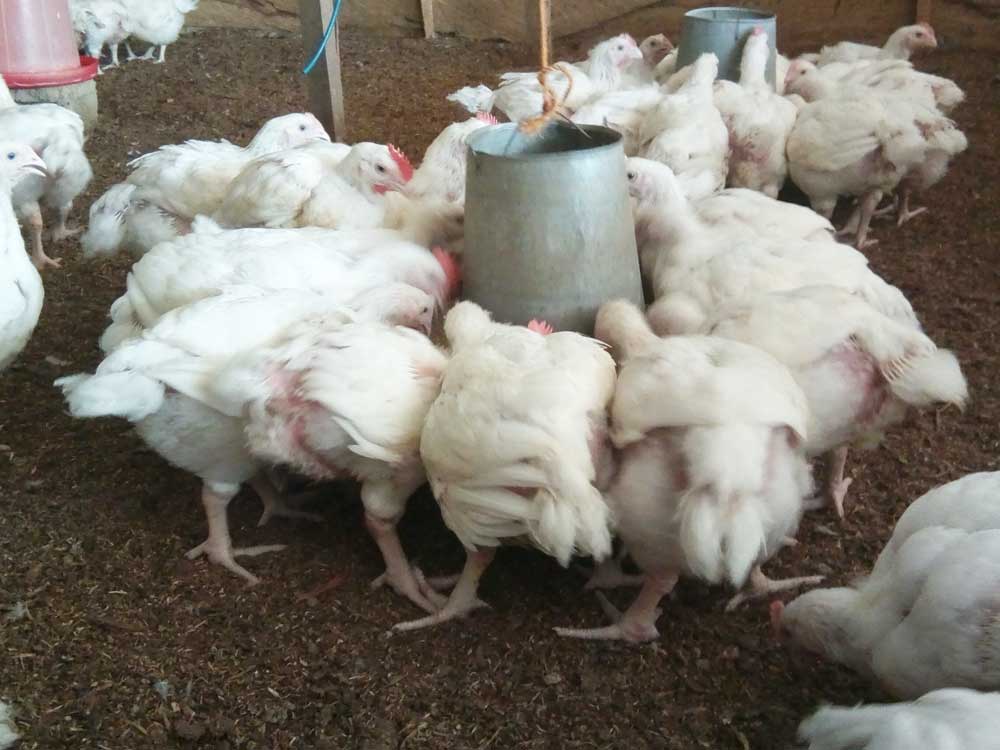
Ask many broiler farmers what consumes most of their money and the answer will usually be feed.
Feed is necessary, but unnecessary feed wastage is not.
A farmer may buy quality feed but still lose money because birds waste a significant portion of it.
Common causes include:
- Feeders being too full
- Poor feeder design
- Feed spilling onto litter
- Too many birds around one feeder
- Poorly formulated homemade feed
- Poor feed storage
- Rats and other pests
- Feeding birds according to guesswork instead of monitoring performance
A farmer should regularly monitor feed intake and body weight.
This helps answer an important question:
Are my birds converting feed into meat efficiently?
That is where feed conversion becomes extremely important.
Related articles:
10 Costly Broiler Farming Mistakes That Keep Farmers Poor (And How to Avoid Every One of Them)
- Don’t Chase Cheap Feed — Chase Value
Cheap feed is not necessarily cheap production.
Suppose Farmer A buys cheaper feed, but his birds reach market weight slowly.
Farmer B buys slightly more expensive but nutritionally balanced feed, and his birds reach market weight earlier with better feed conversion.
Farmer B may actually spend less money producing each kilogram of chicken.
This is one of the hidden secrets of broiler farming profitability.
The right question is not:
“How cheap is this feed?”
Ask:
“How much meat am I producing from every kilogram of feed?”
That is a much more useful business question.
- Mortality Quietly Eats Profit
A dead broiler is more than a dead bird.
It represents money already spent on:
- The chick
- Feed
- Vaccination
- Labour
- Electricity
- Water
- Medication
- Housing
- Other production expenses
If you lose 100 birds from a batch of 1,000, you haven’t simply lost 100 birds.
You have also lost the money invested in getting those birds to the age at which they died.
This is why successful farmers monitor mortality every day.
Don’t wait until the end of the production cycle to discover that mortality was high.
Record:
How many birds died today? Why did they die? At what age?
If mortality suddenly increases, investigate immediately.
Related articles:
8 Things Successful Broiler Farmers Never Skip
5 Brutal Reasons Broiler Farmers Struggle to Make Profit (And How you can Fix Them)
- Good Broiler Farmers Watch the Birds, Not Just the Calendar
One common mistake is saying:
“My birds are six weeks old, so they must be ready.”
Age is important, but performance matters more than age alone.
Two farms can have six-week-old broilers with very different body weights.
The successful farmer regularly checks:
- Body weight
- Uniformity
- Feed consumption
- Water consumption
- Mortality
- Activity
- Droppings
- Feather condition
- Respiratory signs
- Leg problems
If something changes suddenly, the farmer investigates.
A bird cannot tell you that something is wrong, but its behaviour often will.
- Water Quality Is a Hidden Secret
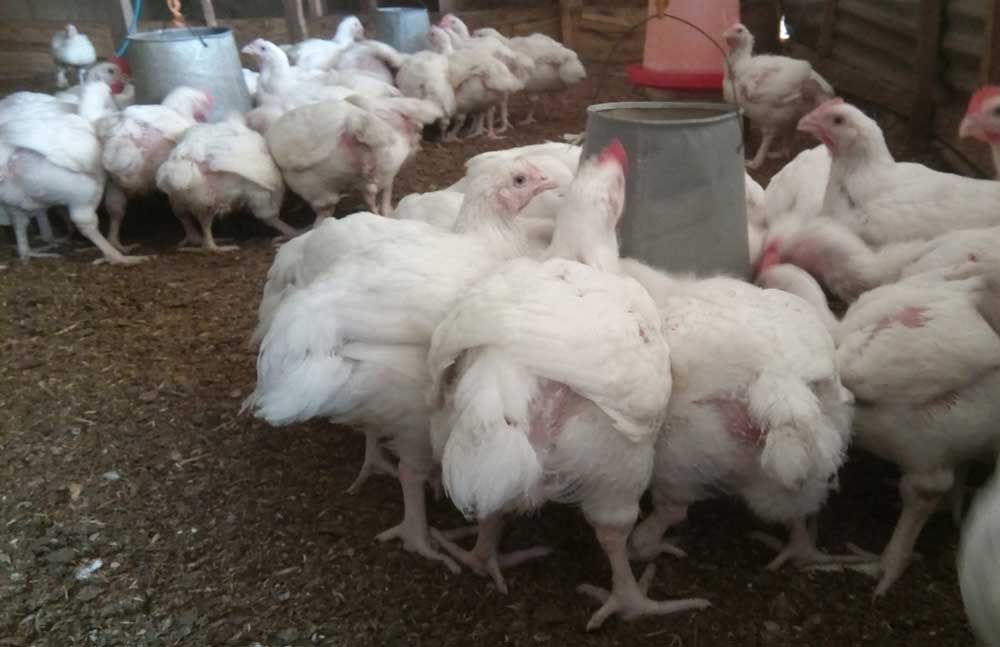
Farmers sometimes spend a lot of money on feed and vaccines but pay very little attention to water.
That is a mistake.
Broilers consume a lot of water, and water quality can affect their health and performance.
Dirty drinkers can become a source of contamination.
Poor water availability can also reduce feed intake and negatively affect growth.
Drinkers should be cleaned regularly, and birds should have reliable access to clean water.
During hot weather, water management becomes even more important.
A farmer should also pay attention to leaking drinkers because wet litter creates another set of problems.
Related articles:
Rainy Season Nightmare: How Damp or Wet Litter is Secretly Killing Your Broiler Profits
6 Ways Your Environment Can Affect Your Broilers’ Behaviour and Performance
- Wet Litter Can Turn Profit Into Loss
Wet litter is not simply an unpleasant farm condition.
It can contribute to poor air quality, ammonia problems, dirty birds, footpad problems and disease challenges.
And once the birds start suffering, growth and feed efficiency can suffer too.
Good ventilation, proper drinker management, appropriate stocking density and regular observation can help keep litter dry.
A simple rule is:
Don’t wait until the house smells strongly of ammonia before taking action.
If the farmer can smell strong ammonia, the birds are already being exposed to it.
- Overcrowding Can Reduce Profit
Some farmers believe that putting more birds into a house automatically means more money.
Not necessarily.
More birds can mean more revenue only when the housing system can support them properly.
Overcrowding can increase:
- Heat stress
- Competition for feed and water
- Wet litter
- Disease pressure
- Poor growth
- Mortality
- Uneven bird sizes
The farmer should consider the available floor space, ventilation, climate and management capacity before increasing stocking density.
Sometimes fewer healthy birds can be more profitable than more stressed birds.
- The Biggest Secret: Know Your Cost Per Kilogram
Many farmers know the price of a chicken but don’t know the cost of producing it.
That is dangerous.
Imagine a farmer sells a broiler for ₦10,000.
He may feel happy because the bird sold for ₦10,000.
But what if that bird actually cost ₦10,500 to produce?
The farmer has made a ₦500 loss.
This is why serious farmers calculate:
Total production cost ÷ total kilograms of live weight produced
This gives a much clearer picture of broiler farming profitability.
If your cost of producing one kilogram of live chicken is ₦X and the market is paying significantly above that, you have room for profit.
If your production cost is approaching your selling price, you have a problem.
- Buying at the Right Time Can Save Money
Successful farmers don’t only manage chickens.
They manage purchasing.
They watch the prices of:
- Feed
- Maize
- Soybean meal
- Premixes
- Vaccines
- Chicks
- Litter
- Other farm inputs
Where practical, buying certain inputs strategically can reduce production costs.
However, don’t buy large quantities simply because something is cheap.
Consider storage conditions, shelf life, quality and your actual production needs.
Poorly stored feed ingredients can become contaminated or deteriorate and ultimately cost you more.
- Marketing Should Start Before the Birds Are Ready
This is another major difference between farmers who make money and farmers who panic at selling time.
Don’t wait until your broilers are fully grown before asking:
“Who will buy these chickens?”
Start looking for buyers early.
Potential customers may include:
- Households
- Restaurants
- Hotels
- Caterers
- Food vendors
- Event planners
- Meat sellers
- Retail customers
- Other farmers
- Wholesalers
When you have buyers waiting for your birds, you are in a stronger position.
You are less likely to accept a poor price simply because your birds have reached market weight and you urgently need to sell them.
- Don’t Always Sell Every Bird the Same Way
Different customers may value different bird sizes.
Some customers want smaller birds.
Others prefer large broilers.
Some may want live birds, while others prefer processed chickens.
Understanding your market can help you decide whether to sell by:
- Bird
- Kilogram
- Live weight
- Processed weight
- Wholesale quantity
- Retail quantity
The best-selling method depends on your market and operating costs.
- Record Keeping Is One of the Most Powerful Secrets
You cannot improve what you don’t measure.
Every production cycle should have records.
At minimum, record:
Number of chicks purchased
Number of birds that died
Feed purchased and consumed
Medication and vaccination costs
Labour costs
Electricity/fuel costs
Other expenses
Number of birds sold
Total live weight sold
Selling price
Total revenue
Then calculate your profit.
These records allow you to compare one batch with another.
Maybe Batch 1 had a feed conversion problem.
Maybe Batch 2 had high mortality.
Maybe Batch 3 performed well but sold at a poor market price.
Without records, everything becomes guesswork.
- Scale Is Not the Same as Profit
This is a very important lesson for both small and commercial farmers.
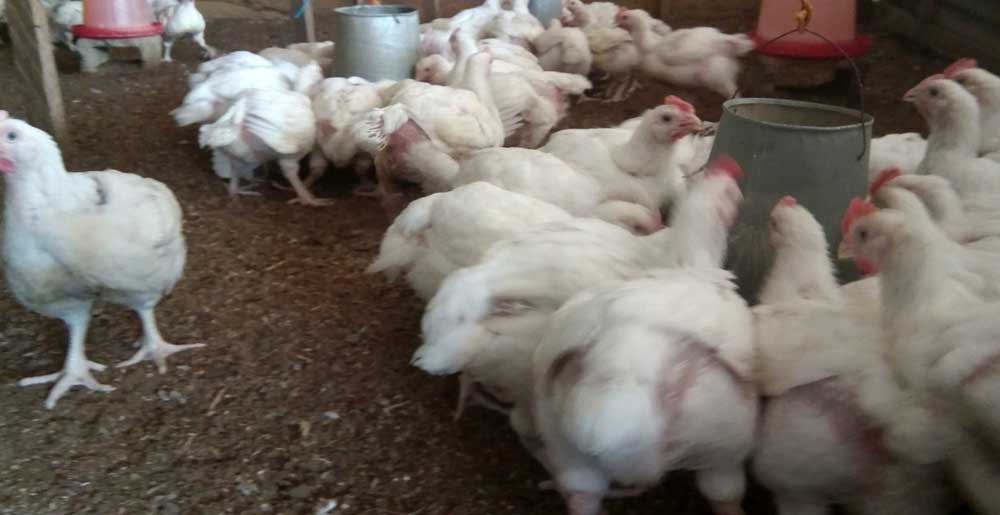
A farmer keeping 5,000 birds is not automatically more profitable than someone keeping 500.
If the 5,000-bird farmer has poor feed conversion, high mortality, expensive inputs and weak marketing, the larger farm can actually lose more money.
Scale multiplies both profit and mistakes.
That’s why small farmers should first build an efficient system before rapidly increasing their flock size.
If you can make money consistently from 300 or 500 birds, you have learned something valuable.
Then you can gradually scale.
- Don’t Ignore Cash Flow
A broiler farm can be profitable on paper and still experience serious cash-flow problems.
Why?
Because money goes out long before money comes back.
You buy chicks today.
You buy feed repeatedly.
You pay for medication and labour.
But you may not receive most of your sales revenue until several weeks later.
Therefore, farmers should plan their cash flow before starting each batch.
Don’t put all your available money into chicks and then discover that you don’t have enough money to feed them properly.
A well-funded 500-bird batch can be more profitable than an underfunded 1,000-bird batch.
The Real Secret Behind Broiler Farming Profitability
The biggest secret is actually not a secret.
Successful broiler farmers manage the farm as a business, not just as a place where chickens are raised.
They know their numbers.
They monitor their birds.
They control feed wastage.
They reduce unnecessary mortality.
They maintain good hygiene and ventilation.
They plan their purchases.
They know their production cost.
They understand their market.
They keep records.
And most importantly, they learn from every production cycle.
You don’t have to be a millionaire before you start managing your farm like a serious business.
Start with the flock you can properly manage.
Measure your results.
Identify where money is leaking.
Correct the problem.
Then scale.
Because in broiler farming, the farmer who controls the small losses is often the farmer who eventually makes the big money.
Profit is not hiding in having more chickens. It is hiding in better management.