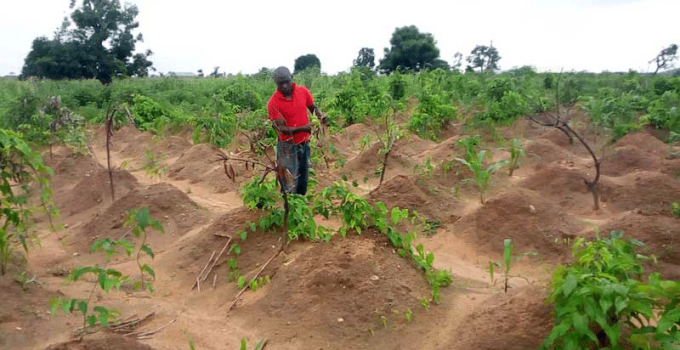
The Farmer’s Secret Weapon: 4 Unbeatable Benefits of Scouting Your Farm for Pests and Diseases
Picture this: you walk through your farm early in the morning, the air still cool, the dew resting gently on the leaves.
Everything seems calm, yet somewhere beneath those green canopies, something might be silently destroying your crops.
Welcome to the world of crop scouting, your farm’s silent superhero.
It’s not flashy. It’s not noisy. But it might just be the smartest move you’ll ever make in protecting your investment, boosting your yield, and staying one step ahead of pests and diseases.
In this post, we’re diving into 4 unbeatable benefits of scouting your farm and crops regularly and why every serious crop farmer should treat it like gold.
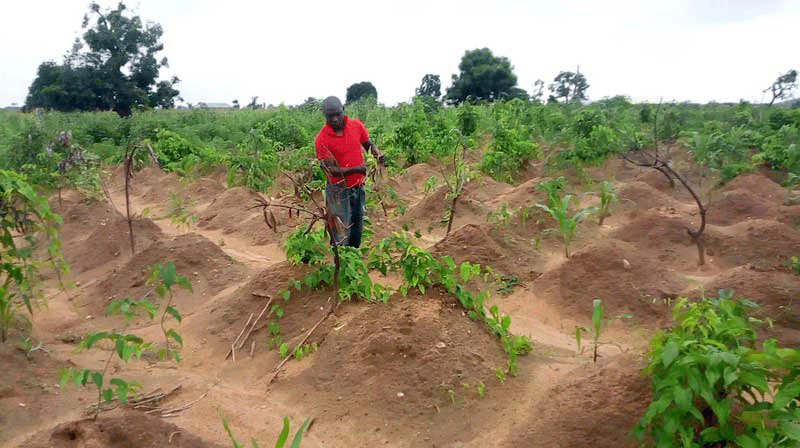
Understanding Exactly What Is Farm Scouting?
Before we jump into the benefits of scouting your farm, let’s be clear on what farm scouting actually means.
Farm scouting is the regular and deliberate observation of your crops to detect early signs of pests, diseases, nutrient deficiencies, weed infestation, and other stress factors.
It’s like giving your crops a health check-up before anything becomes a full-blown disaster.
And no, it’s not about just glancing over your field from a distance. True scouting means walking through rows, flipping leaves, checking stems, studying insect behaviour, and even noting subtle changes in colour, moisture, or growth pattern.
Think of it as “crop intelligence”, the data your eyes and ears gather to make smart decisions.
Related article:
Farming with Little Rain? Discover 5 Proven Ways to Grow Crops in Drought-Prone Areas
7 Strategic Planning in Farming: Secrets Smart Farmers Use to Achieve Bumper Harvests Every Season
6 Health-Boosting Benefits of Farming You Need to Know
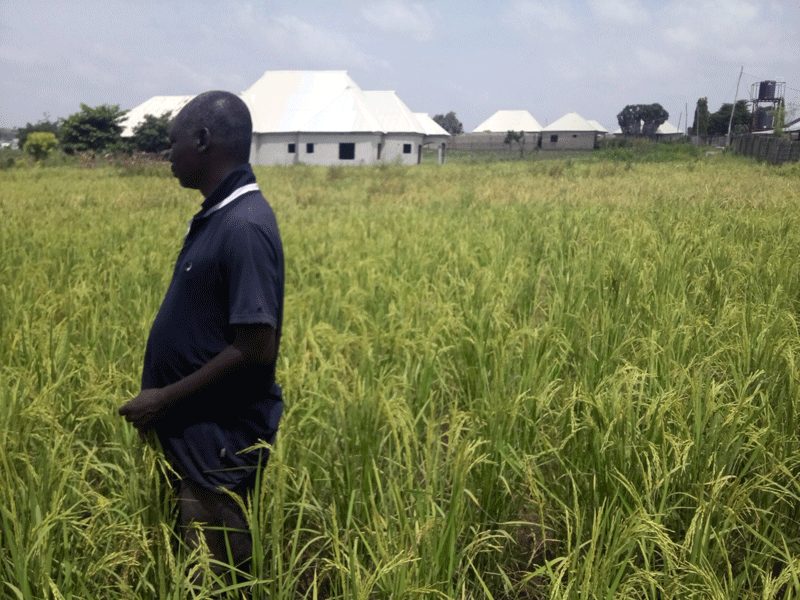
Scouting the rice farm
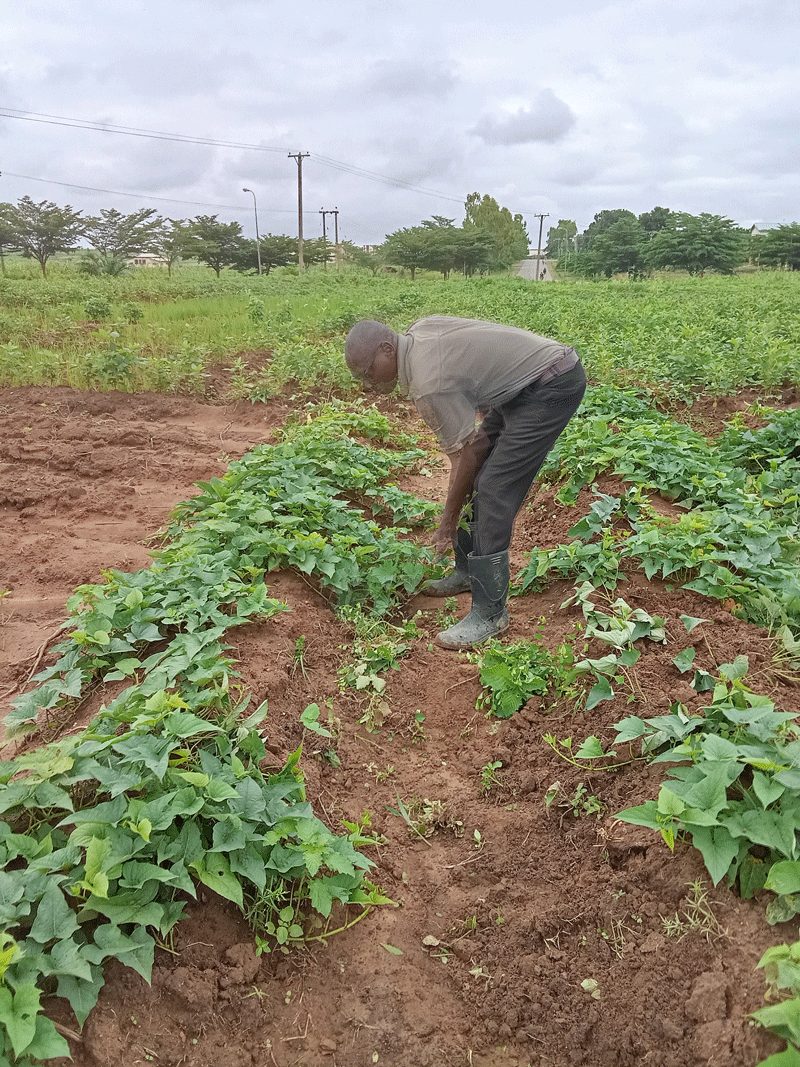
Benefits of scouting your farm in a sweet potato farm
Why Scouting Your Farm Is the Secret Weapon You Didn’t Know You Had. Have a Greater Yield
Let’s face it. Farming is tough. One pest outbreak or undetected disease, and your entire season’s work could go down the drain.
But here’s the truth: most pest and disease problems don’t start big; they start small.
And this is where you will enjoy the benefits of scouting your farm.
-
Benefits of Scouting Your Farm: Involves Early Detection = Cheaper, Faster Control
If you spot a fire when it’s still a spark, you don’t need a fire truck. That’s exactly how pest and disease control works.
Scouting your farm helps you catch problems early when they’re easier and cheaper to solve.
Let’s say you spot just a few fall armyworms munching on your maize leaves. A quick intervention with the right pesticide at that early stage can stop them cold.
But wait a week or two? They’ve multiplied into thousands and turned your field into a buffet.
By the time you notice visible damage from a distance, it’s often too late.
Scouting prevents:
- Overuse of chemicals (which saves you money)
- Total crop loss (which protects your income)
- Panic-driven decisions (which often lead to wrong treatments)
Bottom line? Early detection is powerful. And scouting is how you achieve it.
Related article:
Ready to Go Big in Farming? 6 Conditions You Must Fulfil Before Going into Commercial Farming
3 Secrets that will help you Become More Successful in Rabbit Farming
-
-
Benefits of Scouting Your Farm: Involves the Smart Use of Pesticides and Inputs
-
Let’s talk about money because we all know farming isn’t charity.
Pesticides, herbicides, fungicides, fertilisers, they’re not cheap. And applying them blindly is like pouring cash down the drain.
Scouting gives you targeted precision. You spray only when and where it’s needed.
No more:
- Blanket spraying across the entire farm when only 10% is affected
- Wasting fuel, labour, and time on uninfected zones
- Increasing pest resistance by overusing chemicals
Here’s a simple example:
You scout your tomato farm and find early signs of fungal infection in just two small corners. Instead of spraying the entire field, you treat those specific areas.
You save money, reduce environmental impact, and keep your farm eco-friendly.
Plus, targeted spraying helps beneficial insects like pollinators stay alive critical for crops like cucumbers, okra, watermelon, and even maize.
Scouting makes you a smart, sustainable farmer, not a guesswork gambler farmer.
Related article:
The Hidden Power behind Successful Farms, 6 Reasons You Must Keep Farm Records
5 Shocking Ways Your Poultry Birds Spread Farm-Wrecking Diseases
Less Tillage, Bigger Harvest: 7 Proven Ways Minimal Tillage Boosts Your Farm’s Success
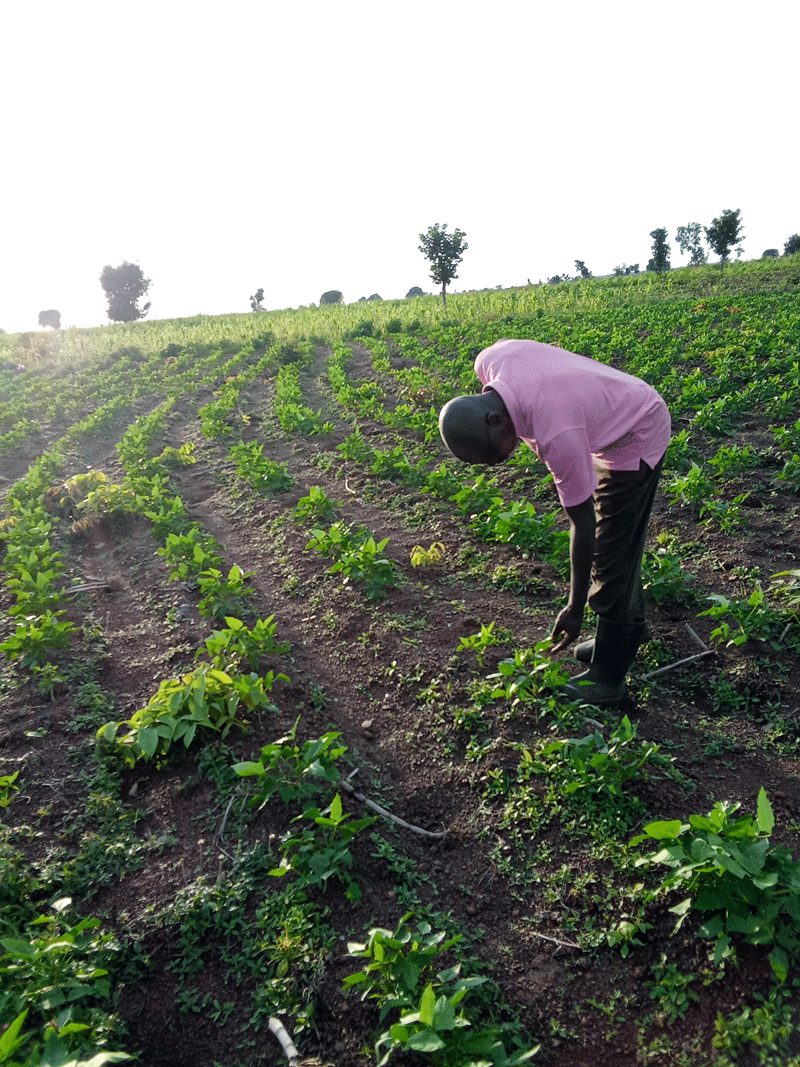
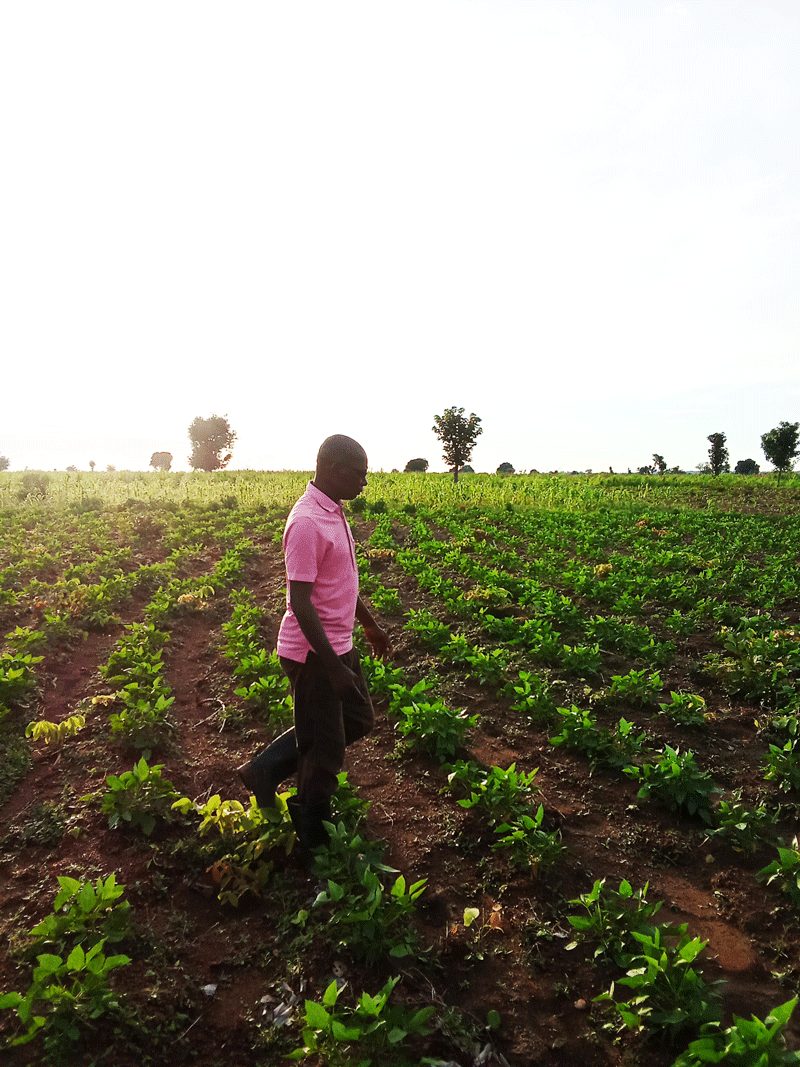
Scouting the farm in a beans or cowpea farm farm
-
Benefits of Scouting Your Farm: Boost Yields and Higher Quality Produce
Farmers often focus on yields. But here’s the kicker: healthy crops don’t just grow more, they grow better.
When you scout and take timely action:
- Your plants remain vigorous and stress-free
- Fruits and grains develop fully without pest damage
- You avoid diseases that cause wilting, rotting, or shrivelling
- You get better colouration, size, weight, and shelf life
Imagine two cassava farms:
One farmer scouts weekly and controls mealybugs early. The other doesn’t. At harvest, the first farmer’s tubers are bigger, cleaner, and market-ready.
The second? Rotting roots and reduced starch quality.
Same crop, different outcomes because of one simple habit: Regularly Scouting the farm.
And if you’re supplying to markets or processors, appearance and quality matter just as much as volume. That’s where scouting becomes your competitive edge.
Related article:
Environmental Benefits of Sustainable Farming Practices to Agriculture
Discover 7 Proven Strategies to Defeat Farm Fatigue Today
Stop Farming Blindly: 5 Proven Reasons Testing Your Soil is the Smartest Farming Move
-
Benefits of Scouting Your Farm: Informed Decision-Making for Long-Term Success
Farming without data is like driving with your eyes closed. Scouting transforms your field into a living notebook.
Each time you scout, you build a clearer picture of:
- Pest cycles and seasonal patterns
- Areas of your farm that are more vulnerable
- Which crops or varieties attract certain pests
- The effectiveness of your past treatments
Over time, you’ll notice trends:
“Oh, I always see stem borers first in the northwest corner,” or
“Downy mildew hits my cucumbers after three weeks of heavy rains.”
This knowledge helps you:
- Plan better crop rotation
- Invest in resistant varieties
- Time your pesticide application accurately
- Build a bulletproof Integrated Pest Management (IPM) plan
Scouting arms you with real-time, real-farm data.
And data equals power.
The big question is how often should you scout your farm?
Great question. The ideal frequency depends on:
- The crop you’re growing
- The stage of growth
- The season and weather conditions
But a general rule of thumb is: once or twice a week at minimum.
During vulnerable stages like flowering or fruiting, or in rainy seasons when disease pressure is high, you might want to scout your farm every 2–3 days.
And don’t just check a few spots. Cover different parts of your field edges, centre, shaded zones, and even around weeds or waterlogged areas.
What Exact Tools Do You Need for Scouting Your Farm?
Don’t worry, you don’t need a lab coat or high-tech gadgets. Just a few basic tools and sharp observation skills:
- Notebook or smartphone for recording findings
- Hand lens for zooming in on insects or fungi
- Scouting form (you can print templates or create your own)
- Flagging tape or marker to label infected spots
- Sample collection bags for lab testing, if needed
- Rain boots and sunhat (because you’ll be out there walking!)
Over time, your eyes and instincts will get sharper. You’ll start spotting problems quicker than ever before.
In Conclusion
Scouting Your Farm Regularly Is the Game Changer in Crop Production
There’s no sugar-coating it: farming is real warfare. You’re battling pests, weather, diseases, and sometimes even poor markets.
But if you had the chance to carry one invisible weapon into every growing season, wouldn’t you take it?
That weapon is scouting your farm regularly.
It’s not just a good habit; it’s your frontline defence, your cost-saving tool, your yield booster, and your long-term strategist all rolled into one.
So, the next time you walk your farm, don’t just stroll. Scout.
Flip those leaves, scan those stems, and trust your eyes.
Your crops will thank you. Your wallet will, too; most importantly, your bank account will swell like fufu.