Feed Is Money: 5 Proven Strategies Successful Poultry Farmers Use to Reduce Feed Waste Every Day
If you ask any experienced poultry farmer where most of their money goes, the answer is almost always the same: feed.
For many small– to medium-scale poultry farmers, feed alone can account for 65–75% of total production costs. That means if feed is wasted, profit disappears quietly… even when birds look healthy and production seems normal.
Many farmers struggle to break even, not because their birds are not performing, but because feed is leaking away daily, through spillage, poor storage, overfeeding, contamination, and simple management mistakes.
The good news is this: reducing feed waste does not require expensive equipment or large-scale automation.
It mostly requires discipline, observation, and small management adjustments done consistently.
If your goal is to break even, or finally start makinga profit, here are:
5 proven strategies successful farmers use every day to reduce feed waste and protect their investment.
-
As a Poultry farmer wanting to Reduce Feed Waste, Adjust Feeders to the Correct Height, Not Too High, Not Too Low
This is one of the most common causes of feed waste, yet many farmers overlook it.
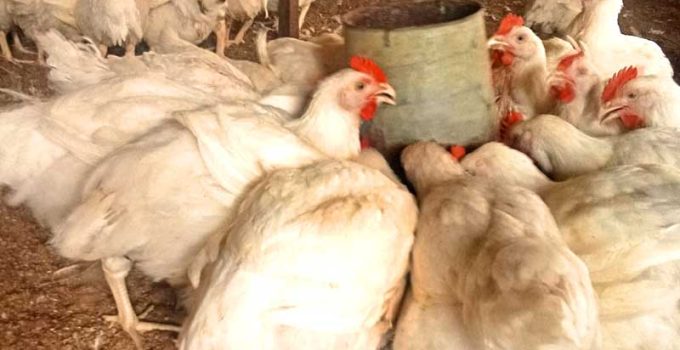
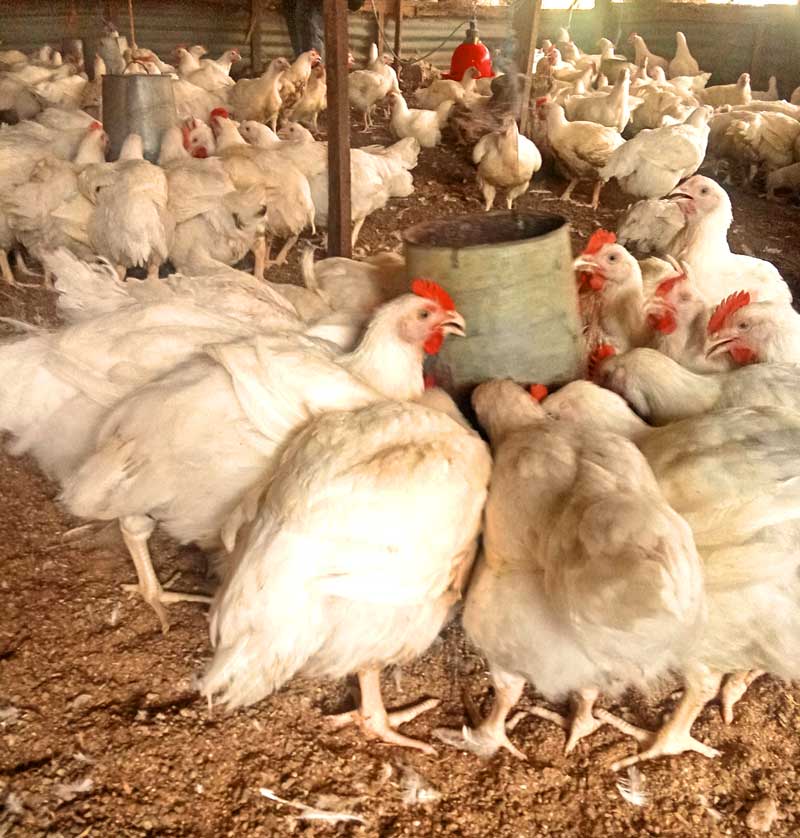
When feeders are placed too low, birds scratch inside, scatter feed, and even sit in the feeder. When feeders are too high, smaller or weaker birds struggle to reach the feed properly, causing uneven growth and wasted feeding time.
The lip of the feeder should be at the same level as the birds’ backs.
This simple adjustment:
- Prevents scratching and spillage
- Encourages proper feeding posture
- Reduces selective feeding
- Ensures uniform access
Real farm observation:
Many farmers notice up to 10–15% feed savings just by adjusting feeder height weekly as birds grow.
Practical habit and routine check-up to carry out:
Check feeder height every 3–4 days. Birds grow faster than you think, especially broilers.
Related article:
How to Resolve the Chicken Feed Problem to Make It Cheaper
Commercial Feed vs. Homemade Feed: What I observed as a Small to medium-Scale Poultry Farmer
6 Incredible Benefits of Feeding Garlic, Turmeric, and Moringa to Your Poultry Birds
-
Avoid Overfilling Feeders to Reduce Feed Waste, Less Is Actually More
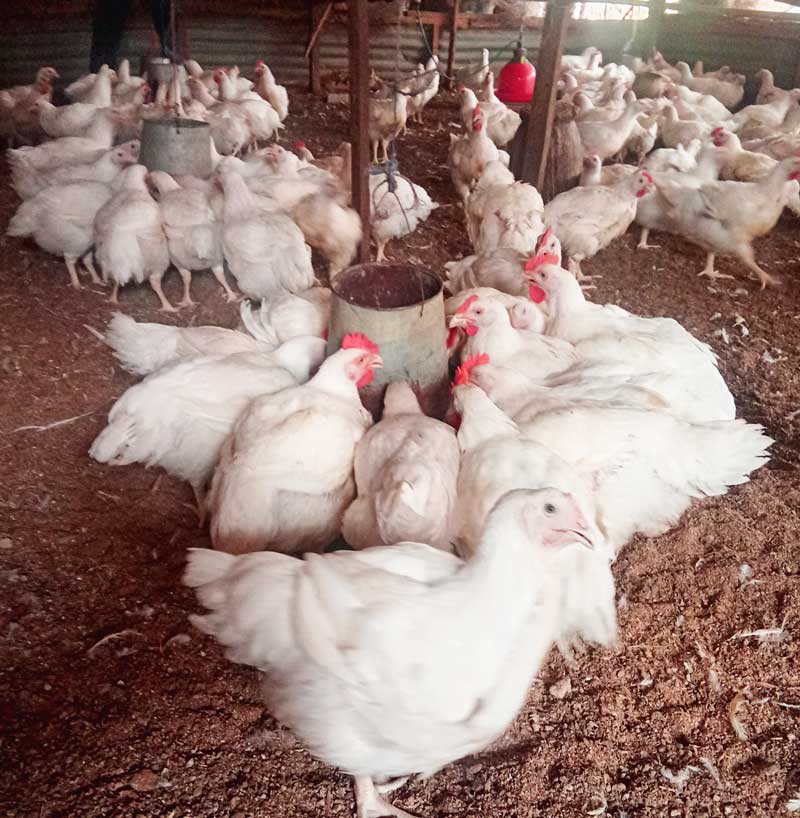
It may feel convenient to fill feeders so you don’t have to refill often. But overfilled feeders are one of the fastest ways to waste feed.
When feeders are too full:
- Birds peck aggressively and spill feed
- Movement shakes feed out
- Wind or vibration causes loss
- Birds select only what they like
The best practice:
Fill feeders only one-third to half full.
This reduces feed waste while still ensuring birds have enough access to feed.
Why experienced poultry farmers prefer this:
They refill more often, but they waste far less.
Think of it this way:
Frequent small feeding saves more money than occasional large feedings.
Related article:
7 Innocent Sins That Destroy Poultry Farms — And the Smart Ways to Escape Them
Vaccine Failure in Poultry, 7 Killer Mistakes Farmers Make and How to Fix Them
-
Store Feed Properly. If you are really serious about how to Reduce Feed Waste, Moisture and Pests Are Silent Profit Killers
Feed does not have to spill to be wasted. Poor storage quietly destroys feed quality even when it looks normal.
When feed absorbs moisture:
- Nutrients degrade
- Mould develops
- Toxins form (especially dangerous for poultry and other livestock)
- Birds eat less
- Growth slows
- Mortality risk increases
Rodents and insects also consume and contaminate feed daily, often unnoticed.
Proper feed storage must include:
– Dry, well-ventilated storage room
– Feed bags are placed on wooden pallets, never directly on the floor
– Distance from wall (at least 15 cm)
– Tight rodent control, i.e., plastic or metal drumsor containers
– First-in, first-out usage (old feed used first)
Related article:
7 Key Benefits of Charcoal to Poultry Farming
8 Things I Wish I Knew Before Starting Poultry Farming
4 Ways You Can Easily Cope With Losses in Poultry Farming
Practical real farm experience:
Some farmers lose the equivalent of 1–2 bags monthly just from rodents and spoilage, without realising it.
That is money eaten before birds even see the feed.
-
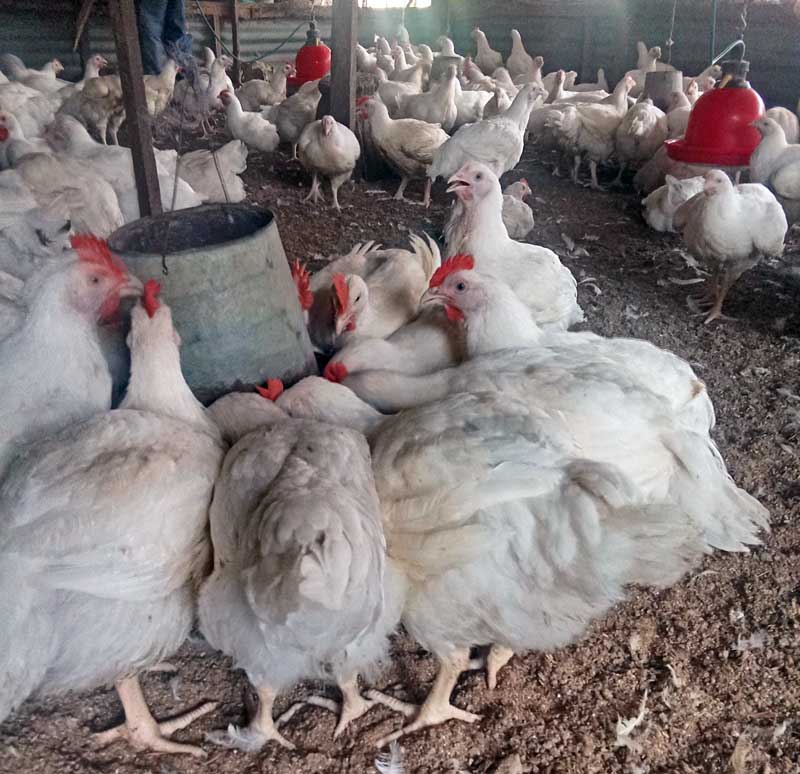
To reduce Feed Waste, always use the Right Feeder Type for Your Birds and Age
Not all feeders suit all birds. Using the wrong feeder leads to unnecessary waste.
For example:
- Open trays waste more feed as birds grow
- Large feeders for small chicks cause scattering
- Damaged feeders leak continuously
- Lightweight feeders tip over easily
Smart poultry farmers match feeders to the growth stage:
Chicks
- Shallow trays or chick feeders
- Easy access
- Minimal depth
Growers and adults
- Tube feeders or hanging feeders
- Stable and enclosed
- Spill-resistant design
Important maintenance rule:
Inspect feeders weekly for:
- Cracks
- Sharp edges
- Loose joints
- Feed leakage
A tiny crack can waste surprising amounts of feed over time.
Related article:
7 Best-Known Noiler Secrets That Will Make You a Profitable Poultry Farmer
Noiler Farming In Nigeria: The New Game Changer
How to Successfully Brood Noiler Chicks
- Observe Bird Feeding Behaviour Daily
This is what separates struggling poultry farmers from consistently profitable ones.
Feed waste is often a symptom, not the real problem.
When birds are:
- Sick
- Stressed
- Overcrowded
- Too hot
- Too cold
- Disturbed by predators
- Drinking dirty water
They eat poorly or waste feed.
What successful poultry farmers watch for daily:
- Uneaten feed remaining for long periods
- Birds scatter feed excessively
- Uneven feeding activity
- Sudden drop in appetite
- Birds crowding or avoiding feeders
Feed behaviour tells you what is happening inside your poultry house.
Ignoring feeding patterns leads to hidden losses that slowly destroy profitability.
To Reduce Feed Waste, Manage Feeding Time Intentionally
Some poultry farmers feed anytime without a structure. But controlled feeding timing improves efficiency.
In hot climates, birds eat better during:
- Early morning
- Late evening
Feeding mainly during cooler hours:
- Reduces stress
- Improves feed conversion
- Minimizes waste
Some farmers even slightly restrict feeding during extreme heat periods to prevent spoilage and wastage.
Why Reducing Feed Waste Helps You Break Even Faster
Breaking even in poultry farming is not only about increasing production, but it is also about controlling costs.
When feed waste drops:
- Feed conversion improves
- Cost per bird reduces
- Growth becomes more uniform
- Disease risk reduces
- Cash flow stabilises
Many small poultry farmers focus only on increasing bird numbers. But expanding production while wasting feed only increases financial pressure.
Efficiency comes first. Expansion comes later.
A Simple Calculation Every Poultry Farmer Should Know
Imagine this:
You raise 500 broilers.
Each bag of feed costs a good amount of money.
You waste just one handful per feeder daily.
After 6 weeks, that small waste can equal 2–3 full bags of feed lost.
Now imagine that across multiple batches yearly.
That is the difference between:
- Struggling to survive
- Breaking even
- Making real profit
Related article:
Why Smart Farmers Prefer Castrated Goats: 5 Surprising Benefits You Can’t Afford to Miss
5 Game-Changing Reasons Turkeys Are More Profitable and Easier to Manage Than Other Birds
A Beginner’s Guide to Cowpea Farming: From Seed to Harvest in Tropical Regions
Checklist Control on how to Reduce Feed Waste Daily
Successful poultry farmers follow simple routines.
Every morning
– Check feeder height
– Check leftover feed
– Observe the bird’s appetite
Every afternoon
– Inspect for spillage
– Remove wet or contaminated feed
Every week
– Inspect the storage room
– Check feeders for damage
– Monitor rodent activity
Always remember, Consistency turns small actions into big savings.
The Mindset Shift That Changes Everything
Many poultry farmers think:
“Feed loss is normal.”
“Small spillage does not matter.”
“It is part of farming.”
But experienced farmers see feed differently.
They see feed as:
- Investment
- Fuel for growth
- Direct profit
They treat every handful as money.
That mindset alone changes how they manage feeding daily.
Conclusion
Reducing feed waste is one of the fastest and most reliable ways small to medium-scale poultry farmers can move toward profitability.
You don’t need expensive technology.
You don’t need a bigger farm.
You don’t need more birds.
You need:
– Proper feeder management
– Smart storage
– Careful observation
– Feeding discipline
These simple practices separate poultry farmers who constantly struggle from those who steadily grow.
If your goal is to break even and eventually build a sustainable poultry business, start by protecting every bag of feed that enters your farm.
Because in poultry farming, one truth never changes:
“Feed saved is profit earned”.