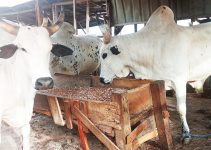
Before You Buy That Cow for Cattle Fattening, Read This! 10 Important Things Every Smart Cattle Farmer Must Check at the Market
Imagine taking your hard-earned money let’s say between ₦450,000 ₦900,000 to the cattle market, buying what looks like a big, healthy young bull, transporting it to your farm and preparing to fatten it for the next four months.
You have already calculated the cost of feed, labour, water and other expenses. You are expecting a good return.
But after a few days, the animal refuses to eat properly. You discover that it is older than you thought, has a health problem or is simply not the type of animal that will give you the weight gain you expected.
That is where the problem begins.
One important lesson every cattle farmer should understand is that profitable cattle fattening starts at the cattle market, not in the feeding pen.
The quality of the animal you purchase will greatly influence how quickly it grows, how much feed it consumes, how much money you spend on treatment and, ultimately, how much profit you make.
Whether you are buying cattle at Beji livestock market in Minna, Kano, Katsina, Kaduna or another livestock market in Nigeria, do not allow the excitement of seeing a big animal to influence your decision.
Before you pay for that cow, here are 10 important things you should check.
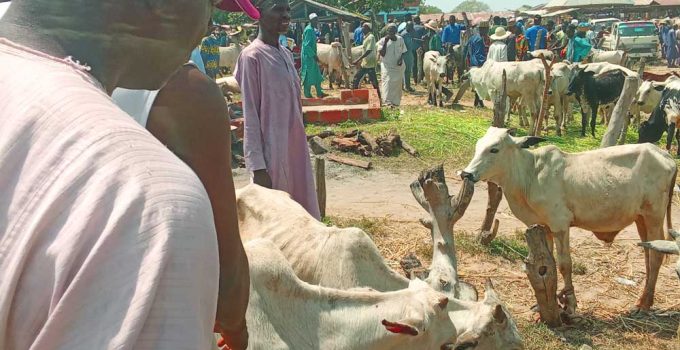
Sampling young cattle for cattle fattening in the open local market
- Check the Age of the Animal
Age is one of the first things to consider when purchasing cattle for fattening.
You want an animal that is still growing and has the potential to put on more body weight during the fattening period.
Generally, young cattle with good growth potential are preferred for intensive fattening. Depending on the breed, health and available feeding programme, animals around 18–36 months may be suitable candidates.
However, age alone does not determine performance.
A well-grown 24-month-old bull may perform better than a poorly managed 18-month-old animal.
How do you estimate the age?
One practical method is to examine the animal’s teeth.
Cattle have temporary milk teeth which are gradually replaced by permanent incisors as they grow.
- Young animals generally have smaller, white milk teeth.
- The appearance of permanent central incisors indicates that the animal is getting older.
- More permanent incisors appear progressively as the animal matures.
Remember that teeth provide an estimate, not an exact birthday. Breed, nutrition and individual variation can affect the timing of tooth replacement.
My advice: If you are not experienced in estimating cattle age, take an experienced cattle dealer, livestock farmer or veterinarian along when buying.
Related articles:
Feed, Grow, & Profit: 5 Smart Ways to Increase Cattle Farm Profit
Home Cow Fattening: How to Prevent Bacterial Infections, Dampness, and Keep Stall-Fed Cattle Healthy
Thinking of Cattle Fattening at Home? Avoid These 4 Expensive Mistakes First!
-
Examine the Body Frame and Structure in Cattle Fattening
Do not buy cattle simply because they look fat or have a big stomach.
A good fattening animal should have a strong body frame capable of carrying additional muscle and body weight.
Look carefully at:
- The length of the body.
- The width of the chest.
- The strength of the legs.
- The development of the hindquarters.
- The overall body balance.
- The straightness and strength of the back.
A relatively long-bodied animal with a good frame and strong legs may have better potential for adding useful body weight than a short, poorly developed animal.
Why are strong legs important?
During fattening, the animal gradually becomes heavier. If its legs, hooves and joints are weak, carrying additional weight may become difficult.
Imagine purchasing a heavy bull only to discover that it struggles to walk properly. You may spend more money on treatment, and its feeding performance may suffer.
Look at the animal from the front, behind and both sides. Do not inspect it from only one direction.
- In Cattle Fattening, Always Check the Health Condition before Paying
This is one area where farmers must be extremely careful.
A sick animal can turn an otherwise promising fattening investment into a financial problem.
Some cattle appear strong in the market because they are standing, moving around and surrounded by other animals. But appearances can be misleading.
Take time to examine the animal.
Look for:
- Bright, clear eyes without excessive discharge.
- A clean nose without abnormal discharge.
- Normal breathing without coughing or difficulty.
- A healthy-looking coat without excessive hair loss or skin lesions.
- No obvious wounds, swelling or abscesses.
- No excessive drooling.
- Normal walking and standing.
- No persistent diarrhoea or abnormal dung.
Pay attention to the animal’s general behaviour. Does it appear alert and responsive, or is it dull, weak and isolated?
Also check for ticks, lice and other external parasites.
What about the animal’s temperature?
If you have a thermometer and know how to use it safely, check its rectal temperature.
A typical adult cattle temperature is approximately 38–39.3°C, although age, activity, stress and environmental conditions can influence readings.
Do not rely on temperature alone to declare an animal healthy.
Important: If you suspect an infection, respiratory disease, serious injury or other health problem, involve a veterinarian before purchasing.
It is better to spend a little money on a proper examination than to spend much more treating a problematic animal later.
Related articles:
5 Reasons Your Cattle Are Not Reaching Market Weight on Time
13 Wonderful Benefits of Molasses to Cattle
- Look at the Body Condition, Not Just Its Size
There is a difference between a naturally large animal and an animal with good body condition.
Some cattle have big stomachs because they have recently consumed a lot of roughage. Others have large frames but very little muscle development.
You should learn to assess body condition.
Pay attention to the following areas:
- The ribs.
- The backbone.
- The hips.
- The tail head.
- The loin.
- The shoulder.
A suitable fattening animal should generally have a moderate body condition, with enough muscle development but still have room for improvement.
An extremely thin animal may require considerable time and resources to recover before gaining weight effectively.
On the other hand, an already overfat animal may offer less opportunity for economical weight gain.
For many beef cattle, a moderate body condition score around 2.5–3.5 on a five-point scale can be a useful starting reference, depending on the scoring system and production objective.
Always remember: You are not necessarily looking for the fattest animal in the market. You are looking for one with the best potential to convert affordable feed into additional saleable weight.
Related articles:
Cattle Rearing, Maximizing Your Profit through Minimizing Your Cost of Production
20 Hacks for Successful Goat Farming: Practical Tips Every Farmer Should Know
You Don’t Need to Be Rich to Start Goat Farming: 5 Lies Keeping Aspiring Goat Farmers From Starting
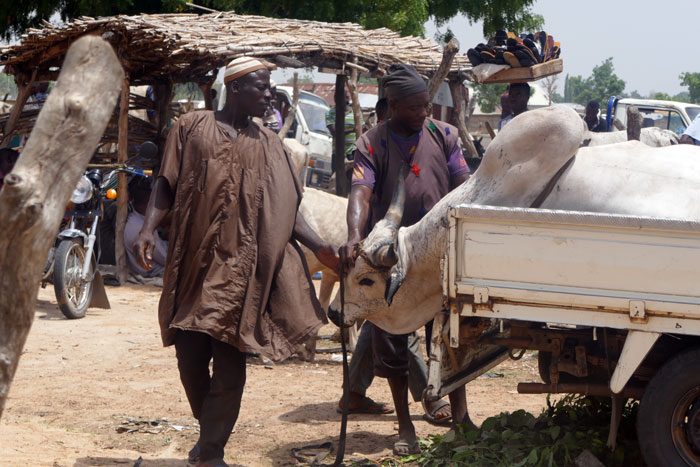
- In Cattle Fattening: Know the Breed and Its Fattening Potential
Breed selection matters because cattle breeds differ in body size, growth potential, adaptability and feeding requirements.
In Nigeria, farmers commonly encounter breeds and types such as:
- White Fulani (Bunaji).
- Sokoto Gudali.
- Red Bororo.
- Adamawa Gudali.
- Crossbred cattle.
White Fulani cattle are popular in Nigeria because of their adaptability, availability and ability to perform under local production conditions.
Sokoto Gudali cattle are also valued for their relatively large body size, muscular development and meat potential.
Red Bororo cattle are known for their hardiness and ability to survive under extensive pastoral conditions.
However, do not assume that every animal belonging to a particular breed will perform equally well.
An animal’s genetics, age, previous nutrition, health and management history all influence its performance.
My advice: Choose animals that are well adapted to your environment and can perform reasonably well on feeds you can afford and obtain consistently.
There is little advantage in purchasing an expensive animal with high feeding requirements if your farm cannot support those requirements.
-
Remember in Cattle Fattening: Always Check the Appetite and Feeding Behaviour
A good fattening animal must be capable of eating enough feed to support growth.
Remember, feed is the engine of cattle fattening.
Before purchasing, observe the animal’s behaviour around feed and water if possible.
Does it show interest in feeding? Does it chew cud normally? Does it appear comfortable when swallowing?
Watch for signs such as:
- Refusal to eat.
- Difficulty chewing.
- Excessive salivation.
- Repeated coughing while eating.
- Abnormal swallowing.
- Signs of mouth or dental problems.
A cattle dealer may tell you that the animal eats very well. That is useful information, but do not depend entirely on the seller’s statement.
Ask about its previous feeding routine and the types of feed it has been receiving.
This information becomes especially important when introducing the animal to your own feeding programme.
For example, an animal previously maintained mainly on grazing and crop residues should not suddenly be given large quantities of maize-based concentrate.
Its rumen needs time to adjust.
A gradual transition over roughly 10–14 days or longer, depending on the animal and feeding programme, can help reduce the risk of digestive problems and ruminal acidosis.
Related articles:
Farmer Health Check: Why Regular Medical Check-ups Are as Important as Fertilising Your Crops
7 Ways You Can Use Good Nutrition and Health Care Practices in Taming Your Cow
4 Important Lessons I Learnt Over the Years While Fattening Cows
- Examine the Legs, Hooves and Walking Ability
This is another important check that inexperienced buyers sometimes overlook.
A cattle fattening animal must be able to stand, walk comfortably and reach its feed and water.
Examine all four legs.
Look for:
- Swollen joints.
- Wounds around the knees and hocks.
- Abnormal leg positioning.
- Damaged or overgrown hooves.
- Signs of lameness.
- Difficulty standing up.
Ask the seller to move the animal a reasonable distance so you can observe its walking pattern.
Do not be satisfied with seeing the animal standing still.
An animal with painful feet or weak legs may spend less time feeding and moving comfortably. This can affect growth and increase treatment expenses.
Remember that as the animal gains weight, the pressure on its legs and hooves also increases.
My practical tip: If you notice persistent lameness, joint swelling or difficulty walking, seek veterinary assessment before making payment.
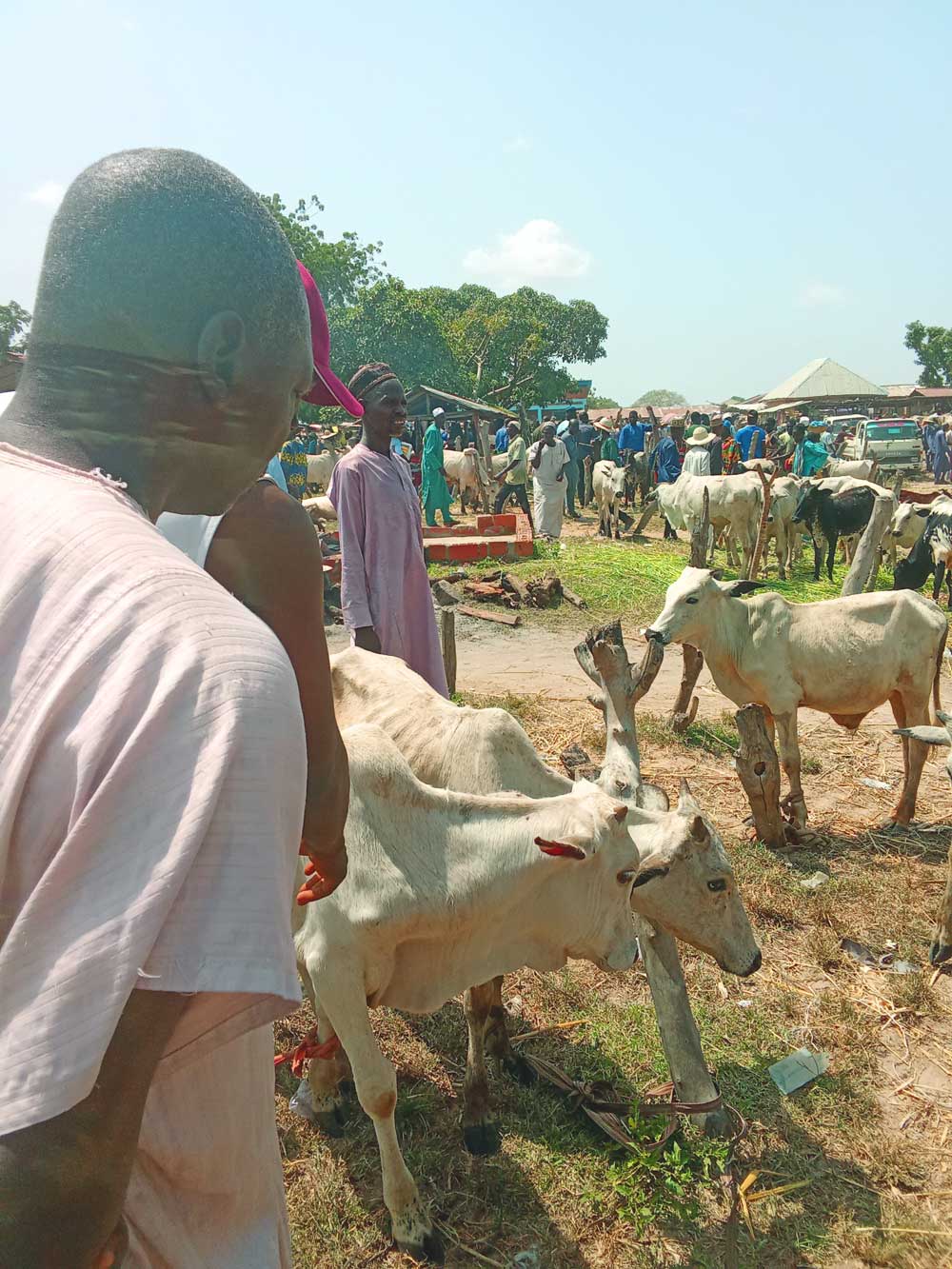
- Check the Animal’s Temperament and Handling Behaviour
Not every large bull is easy to manage.
Some animals are calm and respond reasonably well to handling, while others are extremely aggressive, restless or difficult to control.
For a small- or medium-scale farmer, temperament matters because you may not have many workers or specialised handling facilities.
A difficult animal can create problems during:
- Transportation.
- Feeding.
- Cleaning.
- Veterinary treatment.
- Weighing.
- Loading and offloading.
Look for an animal that is reasonably calm and manageable.
However, remember that cattle may become nervous in crowded markets because of noise, unfamiliar surroundings and handling.
Do not judge temperament from one moment alone.
Also, never put yourself in danger trying to inspect an aggressive bull. Ask the seller to handle it safely.
A good animal should not only have fattening potential; it should also be manageable within your farm’s facilities.
Related articles:
6 Vital Points to Be On the Lookout When Buying a Cow for Fattening
Farmer Health Check: Why Regular Medical Check-ups Are as Important as Fertilising Your Crops
4 Unique Advantages of Cow Fattening You Need To Know
-
Consider the Purchase Price Against Its Expected Market Value to Be Profitable in a Cattle Fattening Business
This is where business thinking becomes important.
You are not buying cattle simply to admire them. You are investing money with the expectation of making a profit.
Before negotiating, establish the likely selling price of finished cattle in your target market.
Then calculate the cost of purchasing, transporting, feeding and managing the animal.
For example, imagine the following illustrative budget:
| Item | Estimated cost |
| Purchase price | ₦750,000 |
| Transportation | ₦30,000 |
| Feed for four months | ₦180,000 |
| Veterinary care and medication | ₦25,000 |
| Labour and miscellaneous expenses | ₦35,000 |
| Total investment | ₦1,020,000 |
Suppose you eventually sell the animal for ₦1,150,000.
Your estimated gross profit would be ₦130,000.
But what happens if the animal develops a health problem, consumes more feed than expected or sells for a lower price?
Your profit can disappear quickly.
This is why you must not allow market excitement to make you overspend.
What should you consider before negotiating?
- Your total available capital.
- The animal’s estimated live weight.
- The current price per kilogram of live cattle.
- Your feeding budget.
- Transportation expenses.
- Expected fattening duration.
- The likely selling price.
- A contingency fund for unexpected expenses.
Where possible, weigh the animal before buying. A reliable weighing scale is far better than guessing its weight from appearance.
If a scale is unavailable, an experienced livestock professional can help estimate its weight using body measurements, but understand that this is only an estimate.
Business lesson: A cheap animal is not always a profitable purchase, and an expensive animal is not necessarily a good investment.
- Ask About Its Previous Management and Prepare for Transportation
Before paying, ask the seller important questions about the animal’s history.
For example:
- Where was it raised?
- What has it been eating?
- Has it been dewormed recently?
- Has it received any vaccinations?
- Has it been treated for any illness?
- Has it travelled recently?
- Is it accustomed to confinement?
These questions help you understand what to expect when the animal arrives at your farm.
Do not assume that every animal coming from a cattle market is healthy or properly vaccinated.
Ask for available treatment or vaccination records and verify them where possible.
Prepare for transportation
Transportation is one of the most stressful stages of cattle fattening.
Long journeys, overcrowding, rough handling, heat, dehydration and poor ventilation can affect the animal’s health.
Before loading:
- Ensure the vehicle is suitable for cattle transportation.
- Avoid overcrowding.
- Provide proper footing to reduce slipping.
- Avoid rough handling and unnecessary beating.
- Arrange adequate ventilation.
- Ensure the animal has access to water before and after the journey.
When the animal arrives, do not rush it into intensive feeding.
Give it clean drinking water, a quiet and comfortable resting area and familiar, good-quality forage.
Observe its appetite, dung, breathing, movement and general behaviour.
If you are introducing it to an existing herd, keep it separate initially and follow appropriate quarantine and veterinary procedures.
A period of around 2–3 weeks of isolation is commonly used, although the appropriate duration and testing depend on disease risks and veterinary advice.
The objective is to allow the animal to recover from transportation stress, adjust to its new environment and undergo necessary health checks before entering the main fattening programme.
Common Mistakes to Avoid When Buying Cattle for Fattening
Even farmers with some experience can make costly mistakes at the market.
Here are a few to watch out for:
- Buying because of body size alone: A big stomach does not necessarily mean a good fattening animal. Examine the frame, muscle development and body condition.
- Ignoring the teeth: You may end up purchasing an older animal with less remaining growth potential than you expected.
- Buying without checking the health condition: A seemingly small health problem can become expensive after transportation.
- Failing to estimate the animal’s weight: Guessing weight can lead to overpayment and poor financial planning.
- Spending the entire budget on purchasing: Always reserve money for transportation, feed, veterinary care and emergencies.
- Ignoring feed availability: Before buying, ensure that you can consistently obtain affordable feed ingredients such as maize offal (dusa), hay, groundnut haulms, cowpea haulms, soybean haulms and other suitable crop residues.
- Rushing the animal into intensive feeding: Sudden changes in diet, especially large increases in concentrate, can cause serious digestive problems.
A Final Checklist Before Paying for Your Cow
Before completing the purchase, take a moment to go through this checklist:
- Age estimated from teeth.
- Body frame and structure examined.
- Health condition assessed.
- Body condition checked.
- Breed and adaptability considered.
- Appetite and feeding behaviour observed.
- Legs and hooves examined.
- Temperament assessed safely.
- Weight and purchase price evaluated.
- Previous management and transportation arrangements discussed.
If you cannot confidently assess these areas yourself, involve an experienced cattle farmer or veterinarian.
Conclusion
Your Profit Begins With Your Buying Decision
Cattle fattening can be a rewarding business for small- and medium-scale farmers in Nigeria, but success does not depend on how much feed you throw into a feeding trough.
It starts with buying the right animal at the right price.
A healthy, well-structured young bull with good growth potential, strong legs and a manageable temperament gives you a better foundation for successful cattle fattening.
Remember, the money you save by avoiding a poor purchase can sometimes be more valuable than the money you hope to make from an expensive animal.
Take your time at the cattle market. Examine the animal properly. Ask questions. Negotiate wisely. And never allow the excitement of buying to replace good business judgment.
One final question for experienced cattle farmers:
When you visit the cattle market to buy an animal for fattening, what is the very first thing you check: the teeth, body frame, health condition, weight or price?
Share your experience in the comment section. Your practical knowledge may help another farmer avoid an expensive mistake.
If you found this article useful, share it with someone planning to start cattle fattening. A little knowledge before buying can save a farmer a lot of money later.