Broiler Growth Problems: Why Your Broilers Are Eating More but Growing Slowly — 7 Costly Feeding Mistakes to Avoid
When Your Broilers Eat More but Give You Less
You enter your poultry house in the morning and see your broilers rushing towards the feeders. You refill the feeders, provide water, and return later to find that the birds have finished another good quantity of feed.
But something is not right.
The birds are not growing as expected. Some look smaller than others of the same age, their feathers are not developing well, and their body weights are disappointing. Meanwhile, the money you spend on feed keeps increasing.
If this sounds familiar, you are not alone. It is a challenge many small- and medium-scale poultry farmers face in Nigeria and other parts of the world.
Broiler production depends heavily on feed, and feed is often one of the largest expenses on a poultry farm. When birds consume plenty of feed without making satisfactory growth, your cost of production rises and your expected profit begins to disappear.
But here is something every broiler farmer should understand: eating more does not always mean growing faster.
A bird may consume more feed because of its age, environmental conditions, feed quality, or poor feed conversion. It may also be eating more because feed is being wasted rather than swallowed. Disease and poor management can prevent the bird from using nutrients properly.
Let us examine seven costly mistakes that can slow broiler growth and, more importantly, what you can do about them without unnecessarily increasing your production costs.
-
Broiler growth problems: Feeding the Wrong Type of Feed or Poor-Quality Feed
One common mistake is assuming that all poultry feeds are the same as long as they look similar.
Broilers have changing nutritional needs as they grow. Starter, grower, and finisher feeds are formulated to support different stages of development, although the exact feeding programme depends on the manufacturer’s recommendations and the production system.
Young chicks need a suitable diet to support early development. As the birds grow, their energy, protein, amino acid, and mineral requirements change.
If you continue using a poorly balanced feed, or switch between feed types without considering the birds’ needs, growth may suffer.
Feed quality matters too. A bag of feed may look fine on the outside but still have nutritional deficiencies, poor ingredient quality, or problems caused by improper storage.
How you can handle this?
Buy feed from reputable suppliers and check the label for the intended bird type, feeding stage, manufacturing date, and storage instructions. Follow a feeding programme suitable for your broiler strain and target market age.
If you mix your own feed, use reliable ingredient specifications and a properly formulated ration. Simply mixing maize, soybean meal, fish meal, and premix by guesswork can produce a diet that looks reasonable but lacks essential nutrients.
For example, a farmer may buy cheap feed to reduce expenses, only to discover that the birds take longer to reach market weight. The money saved on each bag can be lost through extra feeding days, additional labour, and delayed sales.
Practical tip: Compare feed suppliers based on consistent quality and the cost of producing a kilogram of live weight, not just the price of a bag.
Related articles:
10 Costly Broiler Farming Mistakes That Keep Farmers Poor (And How to Avoid Every One of Them)
-
Broiler growth problems: Poor Feeder Management and Feed Wastage
Have you ever noticed feed scattered around the feeders, mixed with litter, or accumulating beneath feeding equipment?
That is money on the floor.
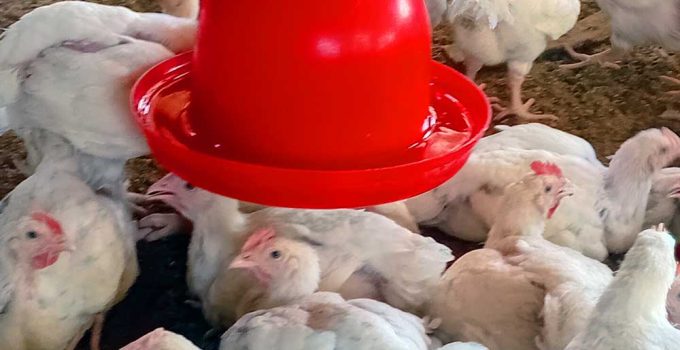
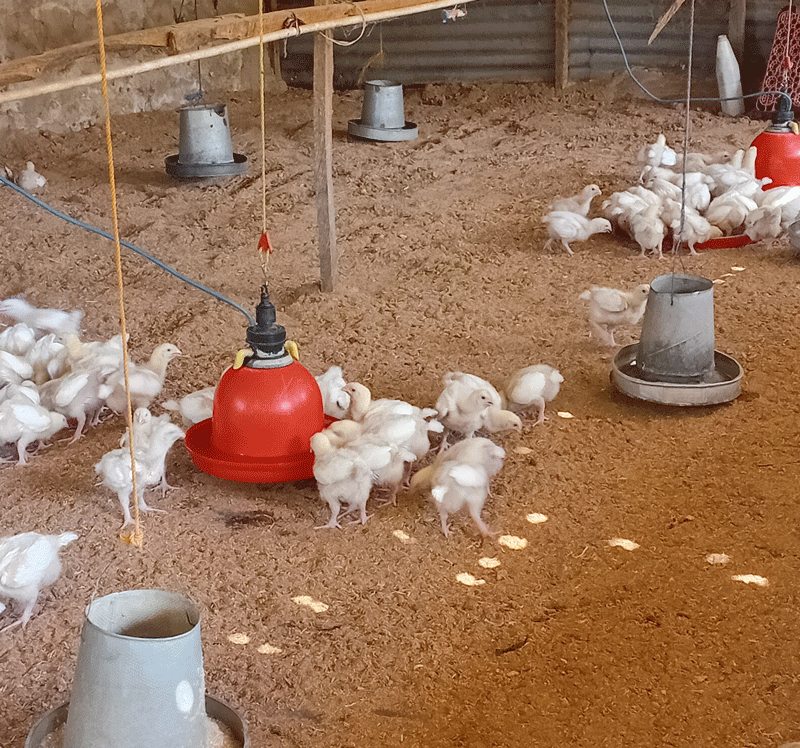
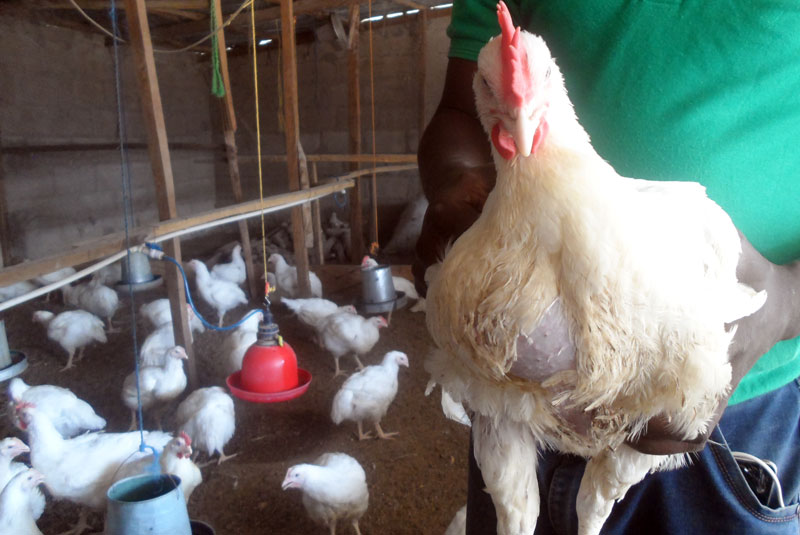
Broilers can waste considerable quantities of feed when feeders are poorly positioned, overfilled, damaged, or set at the wrong height. Birds may scratch feed out while eating, especially when the feeder design encourages spillage.
Another problem occurs when there are too few feeding points. Smaller or weaker birds may struggle to access feed when stronger birds dominate the available space.
What should you do?
Adjust feeder height as the birds grow so that the feeding edge remains accessible without encouraging excessive spillage. Avoid filling feeders to the brim when a lower level allows birds to eat comfortably.
Provide enough feeding space for the flock and distribute feeders appropriately throughout the house. Check for broken equipment and remove feed that has become contaminated with litter or droppings.
Observe the birds during feeding. If some consistently remain at the back or appear unable to reach the feeders, you may need to rearrange or add feeding points.
Remember that feed disappearance is not the same as feed consumption. Before concluding that your birds are eating more than expected, investigate how much feed is actually reaching their digestive systems.
-
Broiler growth problems are also caused by Poor Water Supply or Dirty Drinking Water
This is a mistake that can quietly affect the entire flock.
Farmers sometimes concentrate so much on feed that they overlook water. Yet broilers need a reliable supply of clean drinking water to maintain normal body functions, regulate temperature, digest feed, and support growth.
When water is unavailable, warm, dirty, or difficult to access, birds may reduce feed intake and performance can deteriorate. In hot weather, water demand can increase substantially.
Think about a poultry house in Minna during a hot period. If the water container becomes empty during the afternoon, the birds may experience unnecessary stress at a time when they need water most.
What should you do?
Provide clean water continuously, using drinkers or nipple systems suitable for the birds’ age and the size of the flock.
Check water availability several times daily, especially during hot weather. Clean drinkers regularly and repair leaks or blocked nipples. Excessive leaking can wet the litter, creating additional health and management problems.
If you use a tank, check that the supply is sufficient for the flock and that the water remains clean. Do not assume that water is reaching every bird simply because the tank is full.
Where water quality is questionable, seek appropriate testing or local veterinary guidance on treatment.
Remember: Adding more feed will not solve poor growth if the birds cannot obtain enough clean water.
Related articles:
5 Brutal Reasons Broiler Farmers Struggle to Make Profit (And How you can Fix Them)
8 Things Successful Broiler Farmers Never Skip
- Broiler growth problems are a result of heat stress and Poor Ventilation
Broilers are sensitive to excessive heat, especially as they age and develop substantial body mass.
During hot weather, birds may pant, spread their wings, move away from one another, and reduce their feed intake during the hottest hours. They divert energy to maintain a safe body temperature rather than support growth.
Poor ventilation makes matters worse by allowing heat, moisture, dust, and harmful gases to accumulate inside the poultry house.
This is particularly important for farmers operating in hot climates across Nigeria and other tropical regions.
What should you do?
Provide adequate ventilation without exposing young chicks to harmful draughts. In naturally ventilated houses, make good use of appropriate openings and ensure that air can move through the building.
Avoid overcrowding birds in a house that cannot provide enough airflow. During hot periods, make cool, clean water readily available and plan routine activities to minimise unnecessary disturbance during the hottest hours.
Where suitable and affordable, fans and other cooling equipment can help, but their effectiveness depends on house design, humidity, electricity supply, and maintenance.
Watch the birds rather than relying only on the calendar. Persistent panting, wings held away from the body, and crowding near water points can indicate heat stress.
Practical tip: Do not wait until birds begin dying before taking heat management seriously. Reduced growth and poorer feed efficiency can occur before the problem becomes an obvious emergency.
5. Disease, Parasites, and Poor Biosecurity are also Broiler growth problems
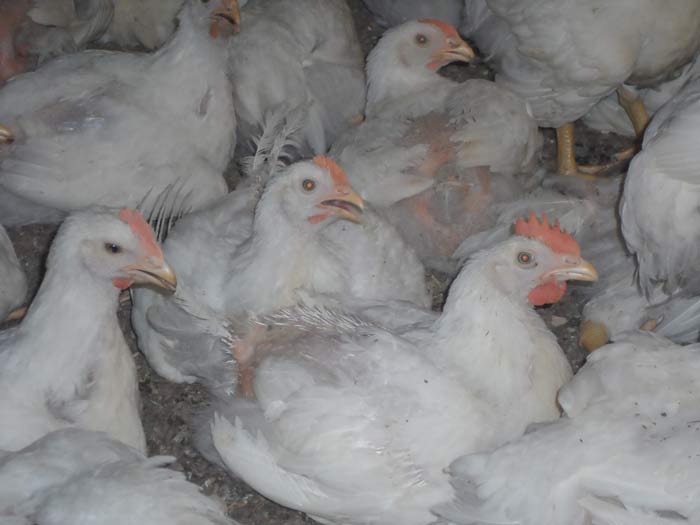
Sometimes, the problem is not the feed itself. The birds may be unable to grow properly because illness is interfering with their health and ability to use nutrients.
Conditions such as coccidiosis, bacterial infections, and certain viral diseases can affect growth, feed intake, and flock uniformity. The particular risks depend on the farm, local disease patterns, vaccination programme, and management practices.
Coccidiosis, for example, can damage the intestines and reduce the birds’ ability to absorb nutrients. Affected birds may show poor growth, diarrhoea, reduced appetite, or other signs of illness. However, these symptoms are not enough to identify the disease with certainty.
Related articles:
Broilers Heat, And Heavy Losses: 5 Painful Lessons That Changed How I Raise Broilers Forever
6 Ways Your Environment Can Affect Your Broilers’ Behaviour and Performance
What should you do?
Keep the poultry house clean and dry, maintain an appropriate vaccination programme with veterinary guidance, and limit unnecessary visitors and movement of equipment between poultry houses.
Use suitable footwear and clean equipment. Control rodents and wild birds where practical, and dispose of dead birds promptly and safely according to local guidance.
Pay attention to changes in feed intake, droppings, activity, and mortality. If growth suddenly slows across the flock, or you notice bloody droppings, respiratory distress, unusual weakness, or increasing deaths, contact a veterinarian promptly.
Do not respond to every growth problem by buying antibiotics. Antibiotics do not treat viral diseases, and inappropriate use can cause treatment failures, residues in meat, and antimicrobial resistance. Use medication only when indicated, with professional guidance and proper withdrawal periods.
Also, do not deworm broilers routinely without a reason and a suitable veterinary recommendation. Parasite risks and appropriate control measures vary with the production system.
The lesson: Healthy birds generally make better use of feed. A sound health programme is part of your feeding strategy, not a separate concern.
6. Overcrowding and Wet Litter are major Broiler growth problems
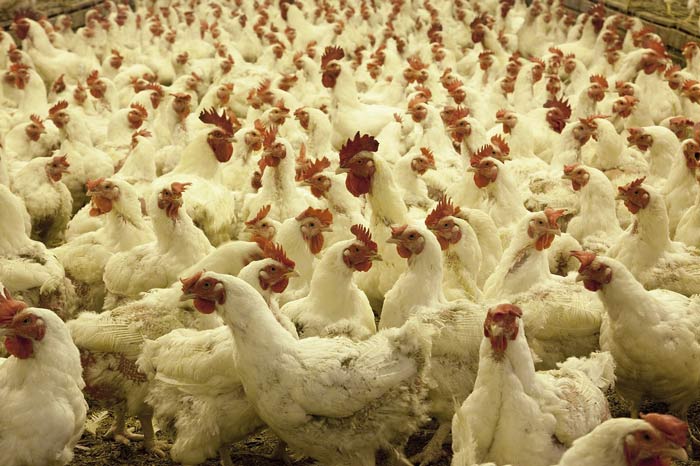
You may have good feed, clean water, and healthy chicks, yet still experience disappointing growth because too many birds are competing for limited space.
Overcrowding increases competition for feeders and drinkers. It can also make ventilation less effective and cause litter to become wet more quickly.
When birds have limited space, they may struggle to move comfortably, reach feed, or rest without disturbance. Wet litter can increase the risk of footpad damage and contribute to conditions that favour coccidiosis and other health problems.
What should you do?
Determine stocking density according to the birds’ expected market weight, house design, ventilation capacity, local climate, and applicable welfare guidance. Do not simply copy another farmer’s number of birds per house.
A house that manages a certain number of broilers comfortably during cooler weather may perform poorly under hot conditions if airflow and cooling are inadequate.
Keep litter dry and reasonably loose. Repair leaking drinkers, remove wet patches where necessary, and avoid allowing spilled water to accumulate around drinking points.
Ensure that all birds have fair access to feeding and drinking equipment.
For small-scale farmers, a simple daily walk through the poultry house can reveal a great deal. Look for wet corners, strong ammonia smells, crowded feeding areas, and birds that are consistently smaller than the rest.
Practical tip: Sometimes reducing the number of birds to a level your housing can support produces better results than trying to manage an overcrowded flock.
Related articles:
The Gut:How To Achieve and Maintain A Healthy Gut In Your Chicken And its Benefit
Noiler chicken farming guide for success
7. Poor Feeding Records and Failure to Monitor Weight
This final mistake is easy to overlook because it does not always look like a feeding problem.
Many farmers know how many bags of feed they have purchased but cannot say exactly how much the flock has consumed, how quickly the birds are growing, or whether their feed efficiency is improving.
Without records, it is difficult to know whether a change in feed, management, or health is helping.
A flock may appear reasonably active, but the average body weight may be well below the target for its age. By the time the farmer notices the difference at market, valuable time and money have already been lost.
What should you do?
Weigh a representative sample of birds at regular intervals, using the same scale and a consistent method. Include birds from different areas of the house rather than selecting only the largest ones.
Record the total feed issued, any feed remaining, mortality, and the birds’ body weights. Compare results with the performance objectives supplied for your broiler strain, taking local conditions into account.
For example, if your birds are consistently lighter than expected at three weeks, investigate immediately. Check feed quality, water supply, temperature, health, and access to feeders.
Do not wait until the fifth or sixth week to discover that growth has been poor for several weeks.
Calculate feed conversion to understand your results
Feed conversion ratio (FCR) is a useful measure of how much feed is required to produce a unit of weight gain.
A simplified calculation is:
FCR = Feed consumed ÷ Live-weight gain
Suppose a flock consumes 100 kg of feed and gains 60 kg of live weight over the period being assessed. Its simplified FCR is approximately 1.67.
That means about 1.67 kg of feed was consumed for each kilogram of live-weight gain.
This is an illustrative calculation. Commercial flock FCR calculations require consistent records and may need adjustments for mortality, starting weight, and the measurement period.
A lower FCR generally indicates better feed efficiency when comparisons are made on the same basis. However, FCR alone does not determine profit; feed prices, chick costs, mortality, medication, labour, and selling prices also matter.
How Small Farmers Can Improve Growth Without Spending Recklessly
If your broilers are already growing slowly, do not rush to change everything at once.
Start with a simple investigation.
First, confirm that the birds are receiving the correct, good-quality feed for their age. Next, check whether water is continuously available. Inspect feeders for wastage, assess ventilation and stocking density, and look for signs of disease.
Weigh a sample of birds and compare the results with the expected performance for their strain and age. If the problem is widespread, seek veterinary or qualified poultry-extension support to investigate the cause.
Keep in mind that the birds’ age, genetics, starting weight, and previous management affect the results you can reasonably expect. Not every flock will perform exactly like the figures shown in a commercial breed guide.
For a farmer managing 100 or 200 broilers, even a basic notebook can help. Record feed purchases, daily feed issued, mortality, weekly weights, medication, and other expenses. These records help you make decisions based on evidence rather than guesswork.
You do not need to purchase every new feed additive advertised in the market. Start by correcting the basic management problems that prevent birds from using their existing feed effectively.
Conclusion
Make Every Bag of Feed Count
When broilers eat more but grow slowly, the solution is not always to give them more feed. Poor-quality rations, feed wastage, inadequate water, heat stress, disease, overcrowding, and weak record-keeping can all reduce growth and eat into your profit.
Start with the basics: good-quality feed, clean water, comfortable housing, proper health management, and regular weighing. Identify the real problem before spending money on additional supplements or changing the entire feeding programme.
Remember, successful broiler farming is not just about how many bags of feed your birds consume. It is about how efficiently they turn that feed into healthy body weight while keeping production costs under control.
Over to you, fellow farmers: Have you ever raised broilers that ate plenty but failed to reach the expected market weight? What did you discover was the problem — feed quality, heat stress, disease, or something else? Share your experience in the comments. Your lesson could help another farmer save money and improve their flock.