Affordable Goat Feeds: 7 Secrets to Help Goats Gain Weight and Improve Farm Profit
Good Goat Feeding Does Not Have to Be Expensive
If you keep goats in Nigeria or anywhere else where livestock feed prices continue to rise, you probably know this problem: you want your goats to grow bigger and sell at a good price, but buying commercial feed every day can eat deeply into your profit.
The good news is that goats do not need expensive commercial feed alone to grow well. With proper management, a farmer can use locally available grasses, browse plants, crop residues, and selected agricultural by-products to provide a balanced diet at a reasonable cost.
However, there is something important to understand. Cheap feed does not automatically mean profitable feeding. A feed that costs little but provides poor nutrition, or one that makes your goats sick, can cost you more in the long run.
Goat feeding is about knowing what to offer, how to combine different feeds, when to feed them, and how to avoid waste. A goat that receives enough energy, protein, minerals, and clean water is more likely to grow steadily than one that simply eats large quantities of whatever is available.
Whether you raise goats around Minna, Kaduna, Kano, Ibadan, or in another part of the world, the principle remains the same: work with the feeds available in your environment and use them wisely.
Let us look at seven affordable feeds that can help you improve goat growth without putting unnecessary pressure on your farming budget.
-
Natural Grasses and Hay are Good, Affordable Goat Feeds
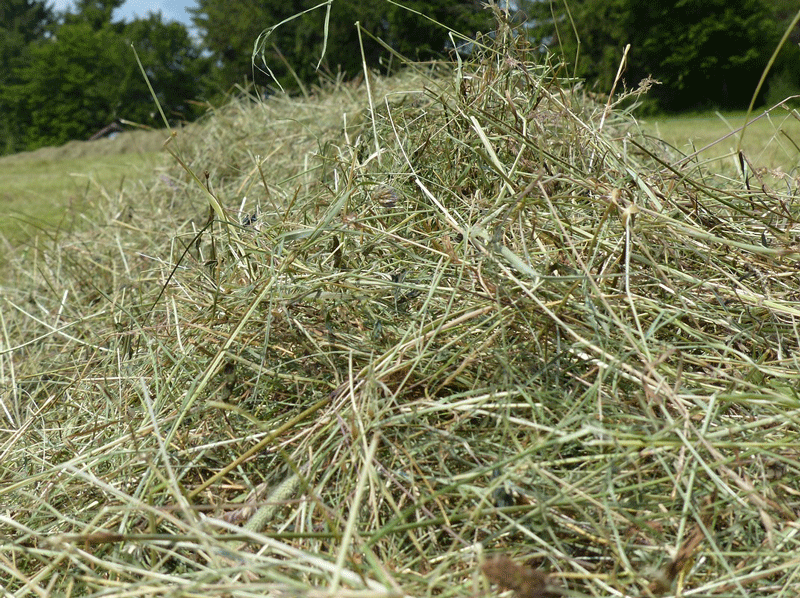
Grass is one of the most accessible feeds for goat farmers. Depending on your location and season, you may have access to Guinea grass, elephant grass, Bermuda grass, or other suitable local grasses.
Fresh grass provides fibre, which supports normal rumen function and helps maintain healthy digestion. Goats are ruminants, meaning they depend on microorganisms in their rumen to break down fibrous feeds.
But there is a catch: not all grasses have the same feeding value.
Young, leafy grass generally provides better nutrition than old, dry, fibrous grass. When grass matures, its fibre becomes harder to digest, and its protein content usually falls.
How to use grass effectively
Cut suitable grasses while they are still reasonably young and leafy. Feed them fresh, or preserve a surplus as hay during periods when grass is abundant.
Hay is particularly useful during the dry season in northern Nigeria, when pasture becomes scarce. Instead of watching available grass dry out and disappear, farmers can harvest it, dry it properly, and store it for later use.
For example, a farmer who has access to grass during the rainy season can preserve part of the harvest and reduce the need to buy feed during the dry months.
Make sure hay is properly dried before storage. Damp hay can develop mould, and mouldy feed can harm your goats.
Common mistake: Depending entirely on mature, dry grass and expecting fast weight gain. Such feed may maintain an animal, but it may not provide enough nutrients for rapid growth, particularly in young or growing goats.
Related articles:
You Don’t Need to Be Rich to Start Goat Farming: 5 Lies Keeping Aspiring Goat Farmers From Starting
5 Solid Ways You Can Feed Your Goats and Maintain Good Health throughout Their Rearing Period
-
Legume Fodder and Crop Residues are also good and Affordable goat feeds
If you grow cowpea, groundnut, or soybeans, do not overlook the feeding value of suitable crop residues.
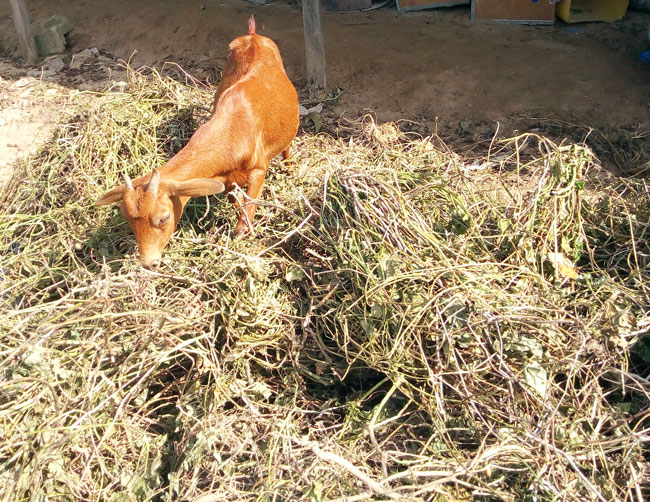
Cowpea vines, groundnut haulms, and soybean haulms can provide valuable roughage and protein compared with many mature cereal straws. Their quality depends on how they were grown, when they were harvested, and how well they were stored.
This is one area where crop farmers and livestock farmers can work together. A crop farmer can sell suitable haulms to a goat farmer, while a mixed farmer can preserve residues from their own fields.
How to use them
Harvest the residues after the crop matures, allow them to dry properly, and store them in a clean, dry place protected from rain.
Offer them alongside grasses or hay rather than relying on one material as the entire diet. Introduce unfamiliar feeds gradually and watch how the goats respond.
For instance, during the dry season, a farmer may combine grass hay with cowpea haulms to provide both fibre and a useful source of additional protein.
Still, crop residues vary considerably in quality. Leaves generally provide better nutrition than thick, mature stems. Residues contaminated with mould, soil, pesticides, or other harmful substances should not be fed.
Common mistake: Leaving crop residues in the open until rain damages them, then feeding them because the farmer does not want to waste anything. Preventing spoilage is often cheaper than treating sick animals.
Related articles:
How to Indulge in Goat Feeding Sustainably: In an Affordable, Nutritious, and Eco-Friendly Way.
Getting Started with Goat Farming Business: A Beginner’s Guide for Smallholders
-
Groundnut Haulms: Very Affordable Goat Feeds
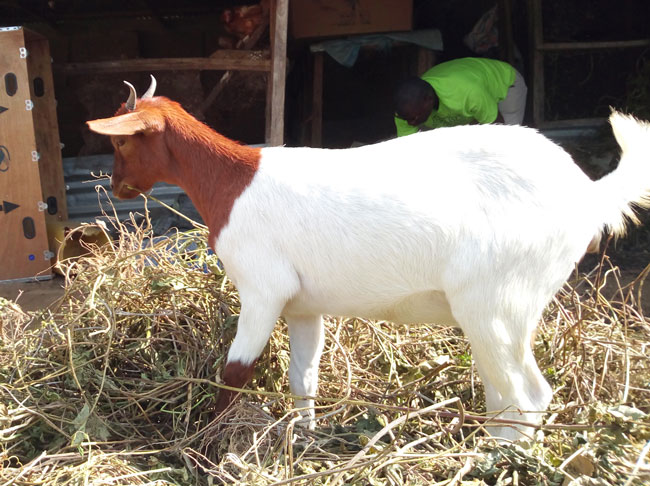
Groundnut haulms deserve special attention because they can be a valuable dry-season feed for goats in areas where groundnuts are widely cultivated.
They contain leaves, stems, and sometimes small amounts of remaining groundnut material. The leaves and finer portions can provide useful protein and energy, although the actual feeding value depends on harvesting and storage conditions.
Groundnut haulms can be especially useful for growing goats that need more than poor-quality dry grass alone.
Practical feeding tips
Store the haulms in a dry, well-ventilated area. Separate heavily mouldy material rather than trying to hide it by mixing it with good feed.
Feed the haulms together with other suitable roughage, and provide clean drinking water at all times.
In northern Nigeria, farmers may be able to purchase haulms from nearby groundnut-producing communities after harvest. Buying when supplies are plentiful and storing them properly can help reduce dry-season feeding pressure.
Before purchasing a large quantity, check that the material is dry, leafy, reasonably clean, and free from mould.
A word of caution: Groundnut haulms can carry moulds that produce aflatoxins, especially when improperly dried or stored. Aflatoxin contamination is a serious concern, so never assume that every bale of groundnut haulms is safe.
-
Cowpea Haulms: another good, affordable goat feeds
Cowpea haulms are another useful feed resource, particularly in communities where farmers grow beans for grain.
Compared with many cereal straws, well-preserved cowpea haulms can offer a better combination of fibre and protein. They are therefore useful when a farmer wants to improve the quality of the diet without depending entirely on purchased concentrates.
The leaves and fine stems are often the most valuable portions. However, their nutritional value is influenced by the crop variety, maturity at harvest, and storage conditions.
How to make the most of cowpea haulms
Harvest the haulms carefully and dry them properly before storage. Keep them off wet ground and protect them from rain.
If you are fattening goats for sale, combine suitable cowpea haulms with grass or hay and, where necessary, a measured amount of an energy-rich supplement.
Do not suddenly replace the entire diet with cowpea haulms. A balanced ration should contain different feed components in appropriate amounts.
For a smallholder, the biggest advantage may be convenience: instead of purchasing every bag of feed, you can preserve part of the crop residue from your own farm.
Common mistake: Assuming that all dry legume residues are equally nutritious. Leaf loss, excessive maturity, and poor storage can reduce their feeding value considerably.
Related articles:
5 Solid Ways You Can Feed Your Goats and Maintain Good Health throughout Their Rearing Period
5 Solid Ways You Can Source Goats for Your Farm
8 Wonderful Benefit of Goat Farming to Mankind
-
Cassava and Yam Peels: Powerful, Affordable goat feeds
Cassava peels can provide energy when properly processed, making them a potential low-cost ingredient in goat diets in cassava-producing regions.
They may be available from household processing, gari production, or local cassava-processing centres. However, their suitability depends on the processing method, quality, and how they are incorporated into the diet.
Raw cassava peels can contain cyanogenic compounds that release hydrogen cyanide. The concentration varies, and feeding inadequately processed peels can be dangerous.
How to use cassava peels more safely
Use properly processed peels obtained from a reliable source. Appropriate drying or other established processing methods can reduce cyanogenic compounds, but simply assuming that a peel is safe because it looks dry is not enough.
Where possible, seek local livestock-extension guidance on suitable processing methods and feed quality. Do not feed mouldy, rotten, or contaminated peels.
Cassava peels are not a complete diet. They are relatively energy-oriented and should be combined with adequate roughage and suitable protein sources.
For example, a farmer might use safely processed cassava peels as one ingredient in a ration that also includes grass hay and legume haulms. The quantities should be adjusted to the animals’ age, weight, body condition, and other available feeds.
Common mistake: Feeding large quantities of cassava peels because they are cheap or freely available. Low purchase cost does not remove the need for safe processing and balanced feeding.
- Maize Bran and Wheat Offal
Maize bran and wheat offal can help provide additional energy in diets for growing and finishing goats.
They are often available through grain mills and feed sellers. Their prices and quality vary from one market to another, so compare the cost per kilogram and inspect the product before buying.
These ingredients can be useful when goats need additional nutrients beyond what grass and crop residues can supply.
However, bran and offal are not interchangeable in every ration. Their fibre, energy, protein, and mineral contents differ according to the product and processing method.
How to use them wisely
Introduce concentrates gradually, and feed measured quantities rather than filling a trough without checking how much the goats consume.
For growing goats or animals being fattened for market, a suitable concentrate can supplement a good forage base. The correct quantity depends on body weight, growth targets, forage quality, and the rest of the ration.
For instance, a farmer feeding mostly mature grass may find that adding a properly formulated concentrate improves growth. But the same quantity may be unnecessary for goats already receiving excellent forage and legume fodder.
Large amounts of rapidly fermentable feed, introduced suddenly, can cause rumen acidosis and other digestive problems.
Common mistake: Feeding too much bran or offal in the hope of making goats grow faster. Concentrates should complement forage, not replace sound feeding management.
Related articles:
Before You Spray: Why Regular Maize Pest Scouting Is One of the Best Investments on Your Farm
Feed Your Rabbits Right: 3 Basic Feeds for Better Growth, Breeding and Profit
How to Become Rich through Cow Fattening
- Browse Plants and Suitable Tree Leaves
Goats naturally browse. They enjoy selecting leaves, shoots, and tender branches rather than eating grass alone.
Depending on the region, suitable browse plants may include mulberry, moringa, and other locally recognised, non-toxic fodder trees and shrubs. Some plants can contribute useful protein, minerals, and other nutrients to the diet.
Browse is particularly valuable when pasture is limited, but farmers must know which plants are safe for their animals.
How to use browse on a small farm
Harvest clean, suitable leaves from known plants and offer them as part of a varied diet. You can also establish appropriate fodder trees along farm boundaries or in designated areas where they will not compete excessively with crops.
Moringa leaves, for example, may be a useful supplementary feed when available, but they should not be treated as a complete ration.
Avoid feeding unidentified plants, leaves collected from chemically treated areas, or material contaminated by roadside pollution. Some tree leaves contain harmful compounds, and some plants can be toxic even when goats appear interested in eating them.
A little time spent identifying safe browse plants with an agricultural extension worker can prevent costly mistakes.
Common mistake: Assuming that because goats naturally browse, every leaf or shrub is safe. Their curiosity and willingness to eat a plant do not prove that it is harmless.
IN CONCLUSION
Bringing the Seven Feeds Together
The real secret is not finding one miracle feed. It is combining affordable ingredients into a diet that meets the animals’ needs.
For example, a farmer in Niger State might use grass hay as the main roughage, cowpea or groundnut haulms as a useful supplementary forage, and a measured quantity of suitable concentrate where additional nutrients are needed.
A farmer in another region might have better access to cassava-processing by-products or different browse plants. The best ration is the one that is safe, nutritionally suitable, consistently available, and economical in that location.
Not every farm needs all seven feeds. Choose ingredients according to availability, quality, and cost.