
10 Safe Farm Lifting Techniques to Prevent Injuries on the Farm
If you have spent any reasonable amount of time farming, you already know that lifting is part of the job.
We lift bags of fertilizer, sacks of maize, feed ingredients, buckets of water, crates of eggs, harvested vegetables, jerrycans, tools and equipment. Livestock farmers also lift feed, move bedding materials and sometimes have to help handle young or injured animals.
Sometimes the load is manageable. Other times, we see a 50 kg bag on the ground and think, “Let me just carry it myself.”
That is where trouble can start.
You lift the bag, straighten your body and suddenly feel that sharp pain in your lower back. Perhaps you manage to finish the day’s work, but the pain follows you home and becomes worse the next morning.
Many farm lifting injuries don’t happen because a farmer is weak. They happen because of how the load is lifted, carried or placed down, especially when the farmer is tired, rushing or working in a poor position.
The good news is that many lifting-related injuries can be reduced by making a few simple changes.
Let’s talk about some practical safe farm lifting techniques that can work even when you don’t have expensive machinery.
Why Lifting Injuries Are So Common on Farms
Farming is different from many indoor jobs because the loads and working conditions constantly change.
One day you may be carrying fertiliser bags. The next day you’re loading harvested cassava. Another day you’re moving feed sacks or carrying water to livestock.
The ground may also be uneven, muddy or slippery.
You may have to lift something from the ground, carry it across a field and then place it on a platform or truck.
Sometimes farmers also lift while twisting their bodies.
For example, imagine you are loading bags of maize onto a vehicle. You pick up the bag in front of you but turn sideways to throw or place it behind you.
That twisting movement while carrying a heavy load puts unnecessary stress on your back.
Fatigue makes things worse. After several hours of farm work, your muscles are tired, your balance may not be as good, and you may be more likely to use poor lifting techniques.

-
Think Before You Lift is a very important safe farm lifting technique
One of the simplest lifting techniques is something many of us forget:
Stop and think before picking up the load.
Ask yourself:
- How heavy is it?
- Can I carry it safely?
- Is the path clear?
- Where am I taking it?
- Where will I put it down?
- Do I need another person to help?
This takes only a few seconds.
Suppose you need to move a 50 kg bag of fertiliser from the store to a vehicle. Instead of immediately bending down and lifting it, first clear the path and decide where the bag will go.
If the distance is long, consider using a wheelbarrow, trolley or handcart.
You may think, “I can carry it.”
The better question is: “Do I need to carry it?”
That small change in thinking can prevent many unnecessary injuries.
Related articles:
Farmer Health Check: Why Regular Medical Check-ups Are as Important as Fertilising Your Crops
Home Cow Fattening: How to Prevent Bacterial Infections, Dampness, and Keep Stall-Fed Cattle Healthy
- Get Close to the Load
When lifting something heavy, avoid stretching your arms far away from your body.
Move your feet closer to the load first.
The closer the load is to your body, the easier it generally is to control.
For example, if you are lifting a sack of feed, don’t stand several inches away and reach forward to grab it. Position yourself as close as practical to the sack.
Keep the load close to your body as you lift and carry it.
This is particularly important when moving awkward objects such as sacks, boxes, buckets and farm tools.

-
Bend Your Knees and Keep Your Back in a Comfortable Position is a powerful, safe farm lifting technique
You have probably heard people say, “Lift with your legs, not your back.”
There is good practical advice behind that statement.
Instead of bending sharply from your waist and pulling a heavy object upward, get into a stable position, bend your knees and use your hips and legs to help raise the load.
Keep the object close to your body.
You don’t need to force your back into an exaggerated straight position. The goal is to avoid a rounded, strained posture and sudden jerking movement.
Take your time.
A controlled lift is usually better than trying to snatch the load off the ground.
Related articles:
5 Farm First Aid Essentials Every Farmer Should Have
6 Ways Lack of Sleep Affects Farm Productivity
Farmer Heat Stress: Signs, Prevention, and First Aid
-
Another safe farm lifting technique is Don’t Twist While Carrying a Heavy Load
This is one of the mistakes I see often on farms.
A farmer picks up a heavy bag and then twists the upper body to put it somewhere else.
Instead, move your feet and turn your whole body.
Suppose you’re loading sacks into a truck. If the sack is in front of you but needs to go to your left, don’t keep your feet planted while twisting your waist.
Lift the sack, keep it close, and move your feet so your whole body turns toward the destination.
It may seem slower, but slowing down for a few seconds is better than spending weeks nursing a painful back.
Related articles:
Common Snake and Insect Bites on Farms and What to Do Immediately
10 Farmer Energy Foods to Keep You Strong During Long Days on the Farm
- Don’t Try to Be a Hero
Farmers are hardworking people, but sometimes that hardworking attitude can work against us.
You see a heavy bag and think:
“I’ve carried heavier ones before.”
Maybe you have.
But your body is not exactly the same every day.
You may be tired, dehydrated, recovering from previous physical work or simply not in the right position.
If a load is too heavy or awkward to handle safely, ask for help.
Two people lifting together can make a big difference.
However, don’t assume that two people automatically make an unsafe lift safe. Both people should communicate clearly.
Before lifting, agree on something simple such as:
“Ready?”
“Lift.”
“Walk.”
“Lower.”
That prevents one person from suddenly lifting while the other isn’t prepared.
- Use Simple Farm Equipment
You don’t need a tractor or forklift for every lifting problem.
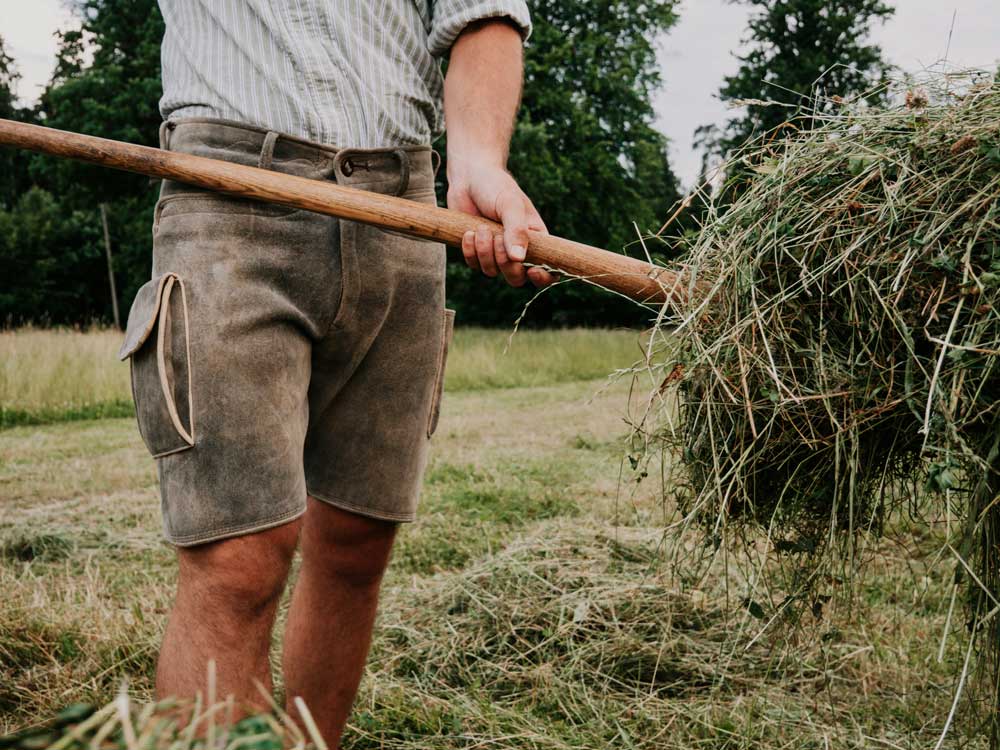
Sometimes a wheelbarrow, handcart, trolley, sack truck or simple ramp can save your back.
Think about a farmer moving 10 bags of feed from a storage area to a poultry house.
Carrying each bag individually might require many trips.
A properly used wheelbarrow or trolley can reduce the amount of manual carrying.
A ramp can also be useful when loading heavy items into a vehicle.
Even a simple wooden platform or raised storage area can reduce how often farmers have to lift heavy bags directly from ground level.
These small investments can pay for themselves by reducing physical strain and making work more efficient.
Related articles:
Mental Health in Farming: How to Cope with Stress, Crop Failure, and Financial Pressure
The Farm Wealth Formula: How Smart Farmers Turn Animal Waste into Bigger Harvests and Bigger Profits
- Improve How You Store Farm Materials
Here’s something farmers sometimes overlook:
Good storage can reduce lifting.
If heavy bags are stored directly on the ground, you have to bend very low to pick them up.
Where appropriate, storing bags on strong pallets or raised platforms can make handling easier.
However, don’t stack materials so high that workers have to lift heavy bags above shoulder level.
A heavy bag of feed is much harder to control when you’re trying to place it above your head.
Keep frequently used materials at a practical height where possible.
Also make sure storage areas are dry, stable and free from unnecessary obstacles.
A farmer struggling to carry a heavy load through a narrow, cluttered store is at greater risk of falling or dropping the load.
- Watch Your Farm’s Ground Conditions
You can use excellent lifting technique and still have an accident if you are standing on slippery ground.
Before lifting, check your footing.
Mud, loose stones, spilled feed, wet concrete and uneven ground can make lifting dangerous.
Wear suitable footwear for the conditions.
If you are carrying something heavy across a farm, don’t choose the shortest route if it is slippery or badly damaged. A slightly longer but safer route may be the better choice.
This is particularly important around livestock houses, irrigation areas and water points.
- Know When the Load Is Too Awkward
Weight isn’t the only problem.
An object can be relatively light but still difficult to handle because it is large, unstable or has no good place to grip.
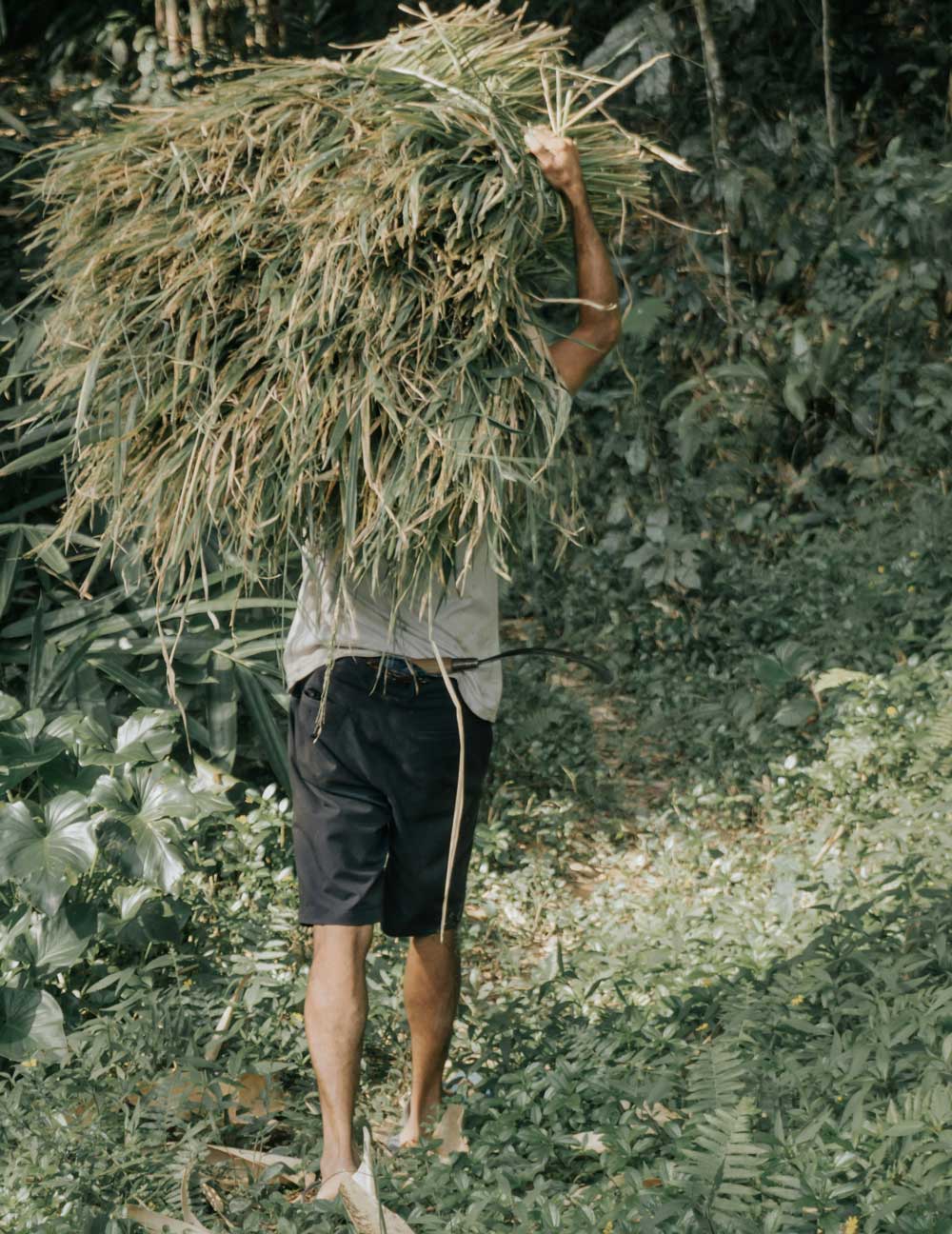
For example, a large bundle of harvested vegetables may not weigh as much as a fertilizer bag, but its size may block your view.
That creates another hazard.
If the load prevents you from seeing where you are walking, consider breaking it into smaller loads or using a trolley.
Don’t sacrifice visibility just to finish the job faster.
Related articles:
Farmer Health Check: Why Regular Medical Check-ups Are as Important as Fertilising Your Crops
5 Reasons Why Free-Range Noilers Thrive: A Complete Farmer’s Guide
- Don’t Ignore Your Body’s Warning Signs
Your body often gives you a warning before a serious problem develops.
If you experience repeated back pain, persistent muscle pain, weakness, numbness, tingling or pain that travels down an arm or leg, don’t simply keep working and hope it disappears.
Resting may be appropriate for a minor strain, but persistent or severe symptoms should be assessed by a healthcare professional.
And if you experience sudden severe pain after lifting, significant weakness, loss of bladder or bowel control, numbness around the groin area, or other serious symptoms, seek urgent medical attention.
A farmer’s health is part of the farm’s productivity.
You cannot run a successful farm if your body is constantly breaking down.
Common Lifting Mistakes Farmers Should Avoid
Some lifting habits are so common that we hardly notice them.
One is lifting with a sudden jerk.
Another is holding heavy objects away from the body.
Another is twisting while carrying.
Some farmers also try to carry loads that block their vision.
Others continue lifting even after becoming exhausted.
There is also the temptation to carry everything manually because “we have always done it that way.”
But farming methods should improve as our understanding improves.
If a simple trolley can save your back, use the trolley.
If two people can safely handle a load that one person struggles with, ask for help.
If the job can be redesigned so the load doesn’t have to be lifted from ground level, change the setup.
A Practical Example on a Small Farm
Let’s say you operate a small poultry farm and receive several bags of feed.
Instead of carrying every bag from the delivery point directly into the poultry house:
First, clear the route.
Second, position a wheelbarrow or trolley close to the delivery point.
Third, load a manageable amount.
Fourth, push rather than carry whenever practical.
Finally, store the feed on suitable pallets or a raised, dry surface.
You’ve just reduced the number of heavy lifts without buying expensive machinery.
The same principle applies to crop farmers, livestock farmers, vegetable growers and farm workers around the world.
Train Workers—Not Just Once
If you employ farm workers, don’t assume they already know how to lift safely.
Show them.
Demonstrate how to approach a heavy load, how to position their feet, how to keep the load close and how to ask for help.
Also encourage workers to report hazards such as slippery floors, damaged wheelbarrows, broken handles or poorly stacked materials.
A damaged wheelbarrow is not just an inconvenience. Its wheel or handle can fail while carrying a heavy load, causing an injury.
Safety is a daily practice, not a speech given once a year.
Conclusion
Farm work will always involve physical effort. We cannot remove every heavy load from agriculture, especially on small and medium-sized farms.
But we can work smarter.
Think before lifting. Get close to the load. Use your legs and hips rather than relying on your back. Avoid twisting. Keep heavy loads close to your body. Ask for help when necessary, and use simple tools such as wheelbarrows, trolleys and ramps whenever they can reduce unnecessary carrying.
Most importantly, don’t be ashamed to say, “This load is too heavy for me to handle safely.”
There is nothing heroic about injuring your back trying to prove you are strong.
What is the heaviest thing you regularly lift on your farm, and what method or equipment do you use to move it safely?
Share your experience in the comments—another farmer may learn something useful from it.


